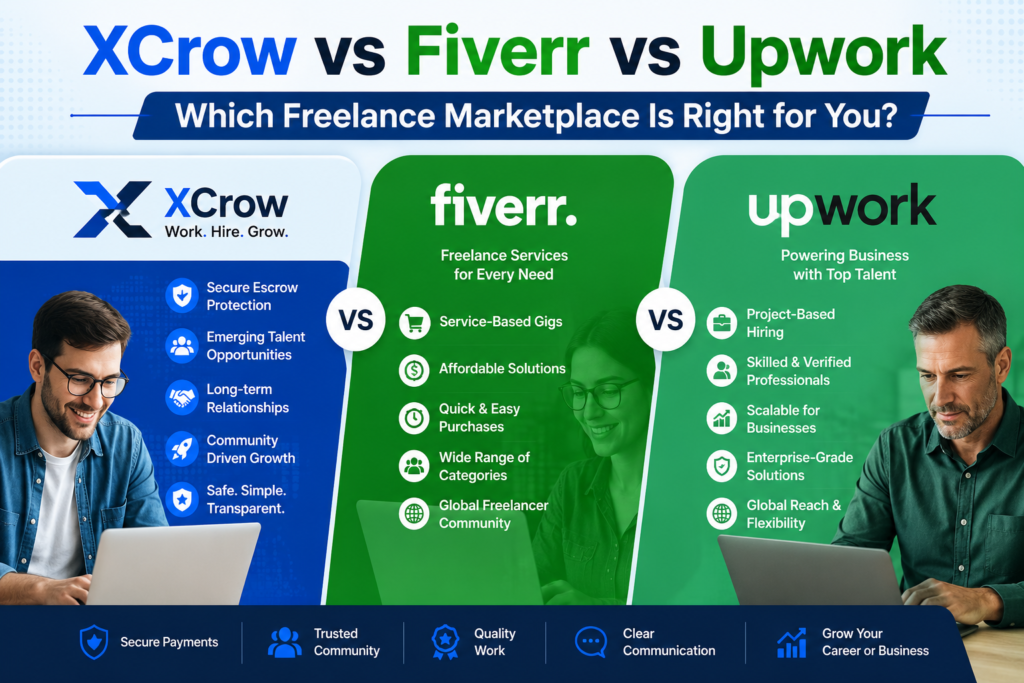
Choosing a freelance marketplace affects how clients find professionals, define projects, communicate, pay, and handle disagreements. Fiverr, Upwork, and XCrow use different models, so the best option depends on the work, budget, preferred workflow, and level of transaction protection required.
This comparison focuses on practical differences rather than claiming that one platform is right for everyone. Features, fees, eligibility rules, and payment policies can change, so review each platform’s current terms before making a decision.
How the main models differ
Fiverr is commonly associated with packaged services. This can work well when a client knows the required deliverable and wants to compare defined offers.
Upwork is commonly associated with proposals, talent searches, hourly work, and longer engagements. It may suit clients who want to interview candidates, manage a detailed project, or develop an ongoing relationship.
XCrow is positioned around structured, trust-focused transactions between clients and freelancers. Its approach may suit users who want clear agreements, protected payments, and a defined path for handling problems.
These are broad descriptions, not guarantees. The experience varies by category, location, professional, and project.
1. Structured and documented transactions
A central part of XCrow’s positioning is escrow-based payment protection. Funds can be handled according to agreed terms and released when relevant milestones or conditions are met. This can reduce uncertainty: the client has a defined payment process, while the freelancer has clearer evidence that funds have been committed.
Escrow does not replace a strong agreement. Before work begins, define deliverables, deadlines, milestones, revision limits, approval conditions, ownership, and responsibilities. Keep important communication and delivery records available for review if questions arise.
2. Support for emerging professionals
Established profiles often benefit from accumulated reviews, but a new marketplace profile does not necessarily mean limited professional ability. A freelancer may have relevant experience from employment, education, direct clients, or personal projects.
Clients should review evidence rather than relying on review totals alone. Ask what the freelancer personally contributed, request authorized examples, and consider starting with a small paid assignment. Clear expectations and fair payment should apply regardless of profile age.
3. Platform size is not the same as fit
A large marketplace may offer a broad pool and many categories. A smaller or more focused platform may provide a simpler workflow or stronger alignment with a particular type of transaction. Neither size automatically proves that it is the best choice.
Compare search quality, communication tools, payment options, dispute procedures, user support, professional availability, profile discovery, withdrawal rules, and the type of clients or projects each platform attracts.
4. Security belongs in the workflow
Freelance projects may involve confidential documents, website access, customer data, creative assets, or payment details. Use individual accounts, strong authentication, secure file sharing, minimum necessary permissions, and clear ownership terms.
Clients should avoid sharing personal administrator passwords and remove access when work ends. Freelancers should protect client information and raise security concerns early. Both sides should be cautious about moving payments or sensitive conversations outside a trusted platform.
5. Repeat relationships can create value
When a client and freelancer work together repeatedly, they learn each other’s standards, communication preferences, and approval process. This can reduce onboarding time and improve consistency, although each new assignment should still have its own written scope.
A relationship-focused marketplace can support this type of collaboration by helping users build dependable professional networks rather than treating every project as an isolated transaction.
How to choose a marketplace
- Is the work a packaged service, a proposal-based project, or an ongoing engagement?
- How are fees, payment timing, and withdrawals explained?
- Are milestones, revisions, approvals, ownership, and exclusions documented?
- What protection exists if the work is late, incomplete, or outside scope?
- Can relevant experience be verified?
- Are communication and file-sharing tools suitable for the project?
- Does the platform support your location and preferred payment method?
Advice for clients
Prepare a specific brief with the objective, audience, deliverables, deadline, budget range, required files, and approval process. Compare understanding and total value rather than price alone. Review relevant examples, ask practical questions, and use a manageable milestone for complex or unfamiliar work.
Advice for freelancers
Describe your services honestly and explain what the price includes. Use authorized portfolio examples, ask questions before making promises, keep deadlines realistic, document scope changes, provide progress updates, and follow secure payment and communication practices.
Final thoughts
Fiverr may suit clearly packaged services, Upwork may suit proposal-based or longer engagements, and XCrow is designed around secure, trust-focused transactions and professional relationships. The right choice depends on the project and the protections both parties need.
Whichever platform you use, success still depends on honest profiles, clear agreements, realistic deadlines, secure practices, respectful communication, and a payment process that matches the risk of the work.

Israel Otoijamun is the founder of Xcrow, an AI-powered freelance marketplace connecting businesses with remote professionals. He has over 15 years experience in digital business, freelancing, technology, and online platforms. He writes about freelancing, remote work, hiring, digital payments, and the future of online work.