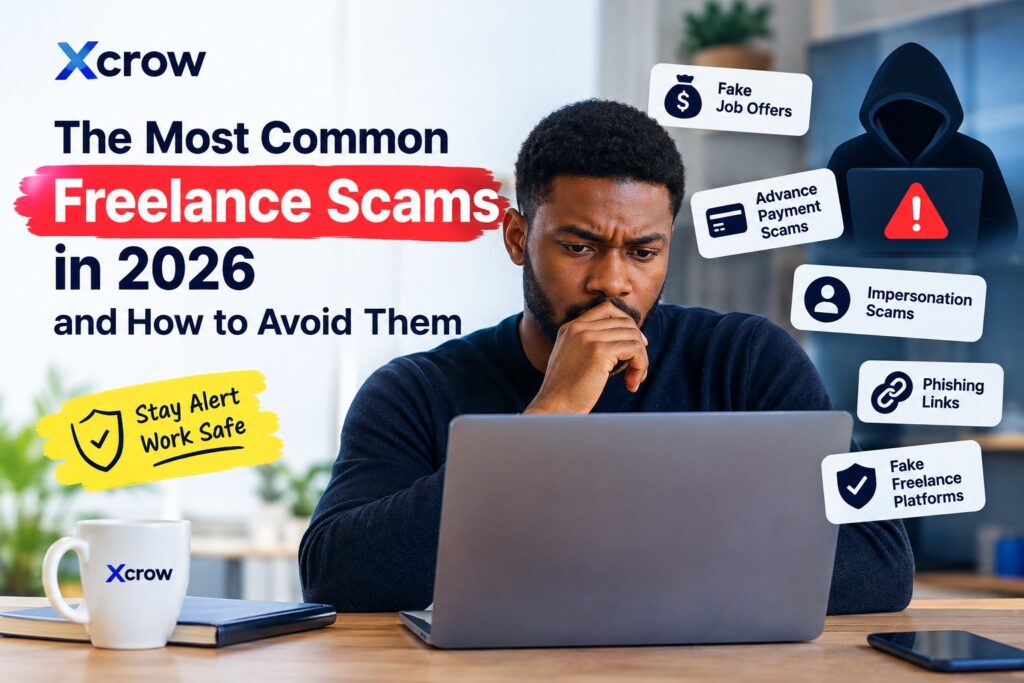
Freelance work creates genuine opportunities for professionals and businesses, but it also attracts scams that exploit urgency, trust and the distance between people working online. A suspicious offer may promise unusually high pay for simple work, request a large unpaid test, imitate a known company, or ask for money before a project begins. Clients can also be targeted through copied portfolios, false credentials, unsafe access requests and incomplete work.
This guide explains the most common freelance scams in 2026, how they work, and what freelancers and clients can do to reduce risk. The goal is not to create fear or suggest that every urgent project is fraudulent. It is to encourage a practical process: verify the other party, document the agreement, limit access, use a reliable payment process and pause when something does not make sense.
Why freelance scams succeed
Scams often succeed because they create pressure before the other person has time to check the details. A fraudster may claim that a decision must be made immediately, that a payment will expire, or that a fee is required before work can start. The request may look professional and include a logo, contract or convincing profile, but appearance alone is not verification.
Remote work also creates information gaps. A freelancer may not know whether a client truly represents a business, while a client may find it difficult to confirm whether a portfolio belongs to the person making the proposal. A documented process helps close those gaps. It gives both sides a chance to ask questions before sharing money, confidential data or account access.
Unrealistic offers and urgent promises
Very high pay for simple work, vague duties and immediate-start promises are common warning signs. Ask for a clear description of the deliverables, the intended audience, the decision-maker, the deadline and the payment terms before investing significant time. A genuine urgent project can exist, but urgency should not prevent reasonable verification.
Be cautious when the other party avoids explaining the business, changes the scope repeatedly, refuses to identify who approves the work, or promises guaranteed income without describing the actual service. Compare the proposed budget with the amount of work requested. Unusually generous terms are not proof of a scam, but they justify additional questions.
Requests for substantial free work
A short, relevant evaluation may sometimes be reasonable. A request for a complete campaign, application, website, report or large collection of designs without payment is different. It may be an attempt to obtain usable work from several candidates while avoiding a normal contract.
Protect your original ideas and portfolio material. Demonstrate your capability with a small sample, an outline or previous work instead of completing the whole proposed project before an agreement exists. If a test represents meaningful labour or the client intends to use the result commercially, request fair payment and written terms.
Payment and fee scams
Never assume that a screenshot, email or payment notification proves that money has cleared. Verify the transaction through the official payment account or platform record. Be especially careful when someone asks you to pay a registration fee, purchase equipment from a specific seller, pay to unlock a supposed payment, or send money back after an alleged overpayment.
Confirm the amount, currency, fees and payment status through a trusted channel. If banking details change unexpectedly, pause and verify the change using contact information you already trust rather than details supplied in the suspicious message. Do not accept responsibility for a transaction that you cannot confirm.
Realistic Example: A Fake Verification Fee
Imagine a freelancer receives a message offering $500 for a simple logo design. The client appears professional and says the project is ready to begin, but asks the freelancer to pay a $40 “verification fee” before the contract can be activated.
This is a major warning sign. The freelancer should not send the $40 or provide payment details. Instead, they should verify the client’s identity, check whether the project exists on the legitimate freelance platform, and keep all communication and payments within the platform’s approved system.
The important lesson is simple: you should not have to pay a stranger to unlock money that they supposedly owe you.
For projects using milestones or an escrow-style process, read the applicable terms carefully. Escrow can structure payment, but it does not guarantee perfect work, a refund or a particular dispute outcome. The agreement, platform rules and evidence still matter. For general background, the Consumer Financial Protection Bureau explains escrow accounts as arrangements in which money is held and managed for a specific purpose.
Impersonation and fake employers
Scammers may copy a company name, profile, logo, job description or email style. Check the person, domain, project details and decision-making authority without relying on one message. Compare the request with the organisation’s actual products, staff and hiring activity.
When appropriate, contact the organisation through a verified channel that you found independently. Do not use contact details supplied only by the suspicious message. A familiar brand name does not prove that the sender is authorised to hire you.
Off-platform pressure
Moving a project away from a structured marketplace can remove useful records and protections. A request to bypass an agreed payment system, use an unfamiliar messaging service, or sign in through an unexpected link deserves careful attention. Convenience should not outweigh verification and security.
If communication must move, keep written records and confirm the scope, payment and approval process before sharing sensitive information. Do not click unknown links or download unexpected files merely because the sender says they are required for onboarding.
Account theft and unsafe access requests
Never share passwords, one-time codes, recovery links or unnecessary identity documents. Be cautious with login pages, unexpected attachments and requests to install remote-access software. Use unique passwords, enable multi-factor authentication where available, and review account activity after a suspicious message.
Clients should also avoid giving unrestricted administrator access when limited permissions are sufficient. Freelancers should request only the access required for the agreed task. Use separate accounts where possible, keep backups of important information, and remove unnecessary access when the project ends.
How clients can be scammed
Clients may encounter copied portfolios, false credentials, undisclosed subcontracting, fake progress, unsafe access requests or freelancers who disappear after receiving payment. Review relevant work and ask what the freelancer personally contributed. Discuss the process, assumptions, limitations and expected handover before approving a substantial milestone.
Start with a clearly defined phase when the project is complex. Set acceptance criteria that describe file formats, supported devices, required features, tone, word count or reporting standards. Milestones should identify the deliverable, deadline, payment and approval process. Industry guidance on fixed-price work, such as Upwork’s guidance on fixed-price projects, illustrates why project phases and deliverables should be defined clearly; always apply the terms of the service you are actually using.
Warning signs during a project
Risk can appear after hiring. Repeated requests for new payments, unexplained changes in banking details, copied work, disappearing communication, refusal to document decisions and pressure to approve incomplete deliverables deserve attention. One delay does not prove fraud, but repeated unexplained behaviour should be addressed promptly.
Return to the written scope, ask specific questions and set a reasonable response deadline. Keep the tone professional while preserving records. Do not send additional money or sensitive access simply because someone creates pressure. If the issue cannot be resolved, use the official reporting, review or dispute process available to you.
How to respond to a suspicious request
- Pause when an offer feels unusually urgent or profitable.
- Ask for specific project information and the identity of the decision-maker.
- Verify the person or organisation through an independent channel.
- Keep communication, approvals, invoices and files documented.
- Use verified payment processes and confirm that funds have cleared.
- Do not click unknown links, open unexpected files or install remote-access tools.
- Do not share passwords, codes or unnecessary identity documents.
- Report suspicious activity through the relevant platform or provider.
- Preserve useful records before blocking or deleting a suspicious account.
Safer project checklist
- Verify the identity and authority of the other party.
- Write the scope, deliverables, deadline and acceptance criteria.
- Agree on payment stages, currency, fees and how changes will be handled.
- Use a limited paid test only when it is genuinely necessary.
- Grant the minimum access required for the task.
- Check files and links before opening them.
- Review each milestone before releasing payment or continuing.
- Keep records until the project and payment are fully resolved.
Practical lessons for freelancers and clients
The safest working relationships are not built on suspicion alone. They are built on clarity. A freelancer who asks useful questions is not being difficult; they are reducing the chance of misunderstanding. A client who defines the scope and pays according to the agreement is not micromanaging; they are giving the project a fair structure.
In practice, many disputes begin with ordinary assumptions: one person thinks a revision is included, another thinks it is extra; a client expects same-day responses, while the freelancer expects asynchronous communication; a freelancer believes a payment is complete because of an email, while the client has only initiated it. Writing down these details before work begins is simple, human and often more effective than trying to repair the relationship later.
Good safeguards should also respect people. Do not judge a professional by location, accent, equipment or access to a particular office. Verify relevant evidence, agree on practical requirements and assess the work fairly. Security measures should reduce avoidable risk without becoming an excuse for unpaid labour or unreasonable surveillance.
Frequently asked questions
Is every urgent freelance project a scam?
No. Some legitimate projects are time-sensitive, but urgency should not prevent reasonable verification, a clear scope or safe payment terms. Ask questions and avoid decisions that cannot easily be reversed.
Should freelancers pay to get work?
Be very cautious. Unexpected registration, training, equipment or release fees are common warning signs. Never pay simply because someone promises guaranteed employment or unusually high earnings.
Can clients be scammed too?
Yes. A freelancer may misrepresent experience, submit copied work, request unsafe access or disappear after receiving payment. Use relevant evidence, milestones, limited access and clear acceptance criteria.
What is the safest response to a suspicious request?
Stop sharing information, preserve relevant records and use the official reporting or dispute process available to you. If an account or payment method may be compromised, secure it through the official provider.
How can a freelancer verify a client?
Ask for a clear brief, business context, decision-maker and payment process. Check information through independent, trusted sources and do not rely on one unverified message.
How can a client verify a freelancer?
Review relevant case studies, ask about personal contribution, discuss the process and begin with a defined milestone. Do not request excessive unpaid work as a substitute for fair evaluation.
Should suspicious messages be deleted?
Preserve useful records before deleting or blocking anything. Messages, invoices, file names and transaction details may help with reporting or dispute handling. Do not forward dangerous links to other people.
Conclusion
Freelance scams are easier to identify when both parties replace pressure with a documented process. Verify identity, question unrealistic offers, protect accounts, confirm payments, limit access and define deliverables before work begins. Clients and freelancers should also remember that fairness and security work together: clear expectations, reasonable tests, timely feedback and professional payment reduce the conditions in which scams and disputes thrive.
This article provides general information, not legal or financial advice. Review the terms of the marketplace, payment provider and applicable service before starting a project.
Recommended Articles
How to Safely Pay Freelancers Internationally Without Getting Scammed
How Clients Can Avoid Scams on Xcrow – 11 top ideas

Israel Otoijamun is the founder of Xcrow, an AI-powered freelance marketplace connecting businesses with remote professionals. He has over 15 years experience in digital business, freelancing, technology, and online platforms. He writes about freelancing, remote work, hiring, digital payments, and the future of online work.