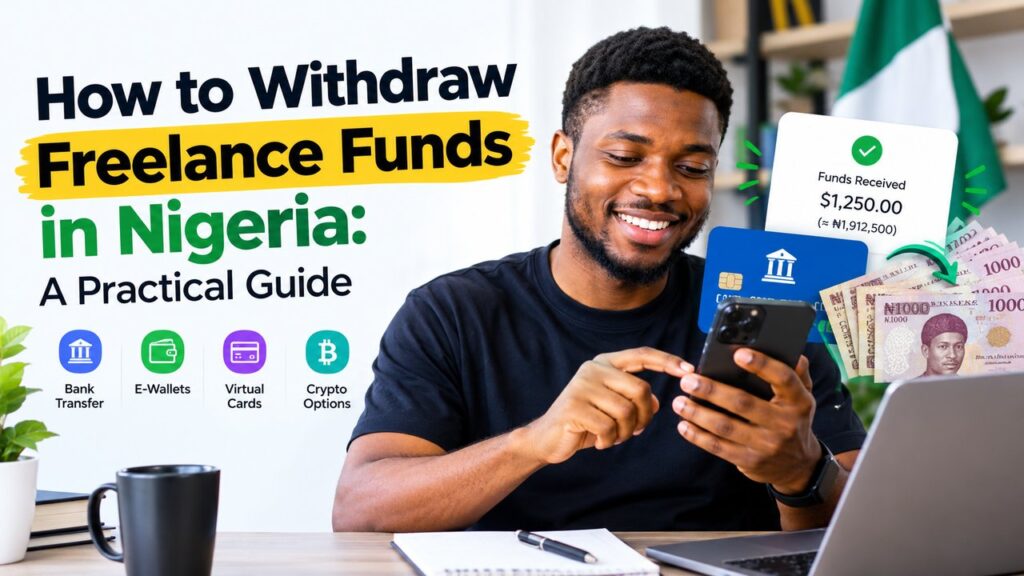
Getting paid is part of freelancing, not an afterthought. A client may be ready to pay, yet the money can still be delayed by account verification, unclear conversion rates, transfer limits or a platform that does not support the recipient’s exact account type. Nigerian freelancers who plan their payment route before accepting a project usually avoid many of these problems.
Through my work in freelancing, digital platforms and online payments, I’ve seen how payment delays, account verification and withdrawal fees can affect freelancers and that’s why I have taken time to write this article.
This guide explains practical ways to receive and withdraw freelance income in Nigeria. It is general educational information, not legal, tax or financial advice. Payment providers change their fees, limits, supported countries and verification requirements, so check the current terms before using any service. My most useful lesson has been simple: never wait until an invoice is overdue to discover that your preferred withdrawal method is unavailable.
Start with a payment plan
Ask the client how they will pay, what currency they use, when funds are released and who pays transaction charges. Put those terms in the contract. State whether the client pays the gross invoice or whether platform, bank and conversion fees are deducted. For recurring work, agree on a regular payment date and keep invoices, contracts and payment confirmations together.
Use one primary method for normal payments and one backup for emergencies. The primary method should be affordable and convenient. The backup should be tested before you need it. Avoid opening numerous accounts without a clear purpose because every account creates security and record-keeping responsibilities.
Common payment routes
Freelance marketplaces
Marketplaces can simplify billing because the platform collects money from the client and releases it after its own review period. This is useful for beginners who do not yet have a payment system. The disadvantages can include service fees, withdrawal charges, exchange-rate spreads, delayed releases and rules governing disputes. Read the withdrawal section before accepting a large project, and never move a transaction outside the platform if doing so breaches its rules.
International payment platforms
Payment platforms may let clients pay by card, bank transfer or another supported method, after which you withdraw to an eligible Nigerian bank account. Compare the full cost: receiving fee, currency conversion, withdrawal fee, minimum withdrawal amount, settlement time and account limits. A platform with a low headline fee can still be expensive if its exchange rate is weak.
Use your legal name consistently. A mismatch between your identity document, platform profile and bank account can trigger a review. Complete verification early, enable two-factor authentication and keep recovery details secure.
Direct bank transfers
Some international clients can send funds directly to a Nigerian bank account through their bank’s international transfer service. Confirm the receiving bank’s requirements, expected currency, transfer charges, correspondent-bank deductions and estimated settlement time. Give the client only the approved account details, and verify them carefully before sending an invoice.
Direct transfers may be suitable for larger recurring invoices, but they can be less convenient for small payments. Ask the client to include your invoice number in the payment reference so you can reconcile the transaction later.
Remittance and money-transfer services
Remittance services can be useful when a client needs a fast consumer-style transfer. Availability, limits, identity checks and collection options differ. Confirm whether funds arrive into a bank account or require collection, and understand the exchange rate before the sender completes the transaction. Keep the receipt and transaction reference until the funds are safely available.
Payment Methods Nigerian Freelancers Can Consider
These are common ways to withdraw freelance earnings in Nigeria.
| Method | Example | What to Check |
|---|---|---|
| Freelance marketplace | Upwork, Fiverr, Xcrow | Withdrawal options, fees, and settlement time |
| International payment account | Payoneer, Wise, Grey | Availability in Nigeria, currency conversion, and withdrawal options |
| Bank transfer | Nigerian commercial bank | SWIFT/intermediary charges and settlement time |
| Remittance | Supported remittance provider | Transfer limits, exchange rate, and collection or bank-deposit options |
Note: Ensure you verify the provider’s current terms before using it.
How to compare a withdrawal method
Use a simple calculation. Start with the client’s payment in the original currency, subtract the receiving fee, conversion cost and withdrawal charge, and compare the final naira amount with the amount promised by another method. Also value your time. A route that saves a small fee but requires repeated support tickets may not be the best business decision.
Check settlement timing. A payment that arrives in two business days may be better than one that offers a slightly better rate but can remain under review for weeks. Check weekends and public holidays, daily limits, monthly limits and whether the first withdrawal is slower than later withdrawals.
Do not rely on screenshots from old blog posts. Provider terms and local banking conditions can change. Record the rate, fee and final amount for each withdrawal so that your future choices are based on your own evidence.
Example: Comparing the Cost of Two Withdrawal Methods
Imagine a Nigerian freelancer receives $500 from an international client and wants to withdraw the money to a Nigerian bank account.
Suppose they are comparing two hypothetical withdrawal methods:
| Cost | Method A | Method B |
|---|---|---|
| Amount received | $500 | $500 |
| Receiving fee | $10 | $5 |
| Other withdrawal costs | $15 | $25 |
| Amount remaining before currency conversion | $475 | $470 |
In this example, Method B has a lower receiving fee, but its other withdrawal costs are higher. The freelancer therefore receives $5 less before currency conversion.
This is why freelancers should compare the total cost of receiving and withdrawing money, rather than choosing a payment method based only on its advertised transaction fee.
The figures above are hypothetical and are provided only to demonstrate how the comparison works. Actual fees, exchange rates, limits and processing times vary by provider and can change over time.
Verification and account safety
Use official applications and carefully inspect login addresses before entering credentials. Never share a password, one-time code, recovery phrase or full card details with a client. A genuine client does not need your account password to pay an invoice.
Keep your profile truthful. Do not use another person’s account, borrow an identity document or create misleading invoices. These shortcuts can cause frozen funds and create compliance problems. If a provider requests additional documentation, respond through its official support process and preserve copies of what you submitted.
Use a strong, unique password and two-factor authentication. Review login alerts and connected devices. Separate business email from personal email if possible, and maintain a secure backup of invoices and transaction references.
Managing conversion and withdrawals
Do not convert every payment immediately. Maintain a working balance for internet, software, transport and other business expenses, but avoid holding more funds than your risk tolerance allows on a platform. Transfer funds to your bank using the provider’s normal process and check the beneficiary details before confirming.
When money arrives, reconcile it against the invoice. Note the original currency, date, rate used, gross amount, charges and net naira received. This makes it easier to price future projects and answer questions from your bank, accountant or tax adviser. Keep records for the period required by applicable Nigerian rules and seek professional advice if your income is substantial or complex.
Handling delayed or failed withdrawals
First check the transaction status, account notifications, bank details and verification messages. Do not repeatedly submit the same withdrawal while one is pending, because duplicate requests can make investigation harder. Save the reference number, date, amount and screenshots.
If the provider asks for clarification, answer accurately and briefly. If the bank rejects the transfer, ask what information is needed for correction rather than guessing. Never pay a stranger who promises to “unlock” your funds. Fraudsters often target freelancers with fake release fees and urgent messages.
Pricing clients professionally
Payment costs should be included in your pricing model, not treated as a surprise. You can quote a project price that already accounts for normal charges, or state clearly that the client covers transfer costs. Do not inflate a quote without explanation. A professional invoice should show the service, period, amount, currency, due date, payment instructions and contact information.
For new clients, consider a deposit or milestone structure. This reduces the risk of completing weeks of work before discovering a payment problem. Use a written scope and define how revisions, late payments and cancellations work.
My practical checklist
- Confirm the client’s payment method and currency before starting.
- Check the provider’s current fees, limits and verification rules.
- Use matching legal names across your accounts.
- Test a small payment before relying on a new route.
- Enable two-factor authentication and never share codes.
- Record gross payment, fees, exchange rate and net amount.
- Keep a tested backup method.
- Separate business money from personal spending where practical.
Final thoughts
The best withdrawal method is the one that is legal, available to your account, reasonably priced, secure and predictable. Nigerian freelancers should compare the complete transaction rather than focusing only on the advertised fee. Build a small process around every payment: written terms, verified accounts, secure withdrawals and accurate records. That process turns getting paid from a recurring source of anxiety into a normal part of running a professional business.
Frequently asked questions
What is the best way to receive freelance money in Nigeria?
There is no universal best option. Compare supported currencies, fees, exchange rates, settlement time, verification rules and withdrawal limits for your specific situation.
Can a client pay directly into my Nigerian bank account?
Some clients can use international bank transfers, but confirm your bank’s requirements and all charges before relying on the method.
Why can a withdrawal be delayed?
Common reasons include identity checks, unusual activity, incorrect bank details, weekends, transfer limits or a provider review.
Should I accept payment in foreign currency?
That depends on your contract, provider support, conversion costs and financial goals. Check the final amount you will actually receive.
How can I avoid freelance payment scams?
Use official platforms, verify payment inside your account, never pay a release fee to a stranger and never share passwords or one-time codes.
Do I need records of freelance payments?
Keep contracts, invoices, receipts, fees and bank confirmations. Ask a qualified Nigerian tax professional how long you should retain them and how your income should be reported.
How much does it cost to withdraw freelance money in Nigeria?
There is no single withdrawal fee because the total cost depends on the payment method, provider, currency conversion rate, receiving bank and transaction structure. Compare the total amount you receive after all applicable fees rather than looking at one advertised fee.

Israel Otoijamun is the founder of Xcrow, an AI-powered freelance marketplace connecting businesses with remote professionals. He has over 15 years experience in digital business, freelancing, technology, and online platforms. He writes about freelancing, remote work, hiring, digital payments, and the future of online work.