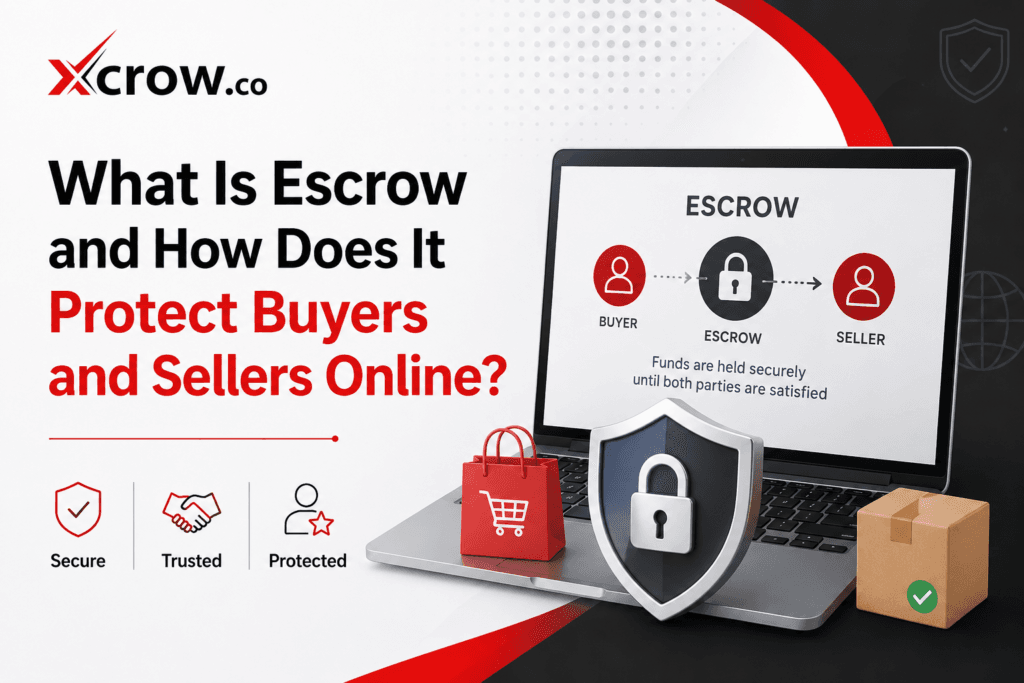
Escrow is a payment arrangement designed to reduce the risk of online transactions. Instead of sending money directly to a seller or asking a seller to begin without payment, a neutral third party holds the funds until agreed conditions are met. The arrangement is useful when two people or businesses do not know each other well, when the transaction is valuable, or when the parties are located in different countries.
The basic idea is simple: the buyer gets a reasonable opportunity to check the delivery, while the seller receives evidence that the money is available before investing time or releasing an asset. Escrow does not remove every risk, and it does not guarantee that a project will be perfect. Its value comes from creating a documented process for payment, delivery, approval, and disputes.
How escrow works
The buyer and seller first agree on the terms. These terms should describe the product or service, price, delivery date, required standards, inspection period, revision process, and conditions for releasing the money. The buyer then deposits the agreed amount with the escrow provider. The funds are held rather than sent directly to the seller.
Once the provider confirms that the funds are secured, the seller begins the work or sends the item. The buyer reviews the delivery against the original agreement. If the buyer approves it, the provider releases the funds. If the buyer identifies a genuine problem, the parties follow the platform’s correction or dispute procedure. The exact rules vary, so both sides should read them before depositing money.
Why online transactions need extra care
Online transactions often involve people who have never met and may live under different legal systems. A buyer cannot always inspect a digital service before paying, and a seller cannot always know whether a client will pay after receiving the finished work. Direct bank transfers may be difficult to reverse, while payment services may have limits or exclusions for certain goods, services, and countries.
Escrow addresses the moment when one party would otherwise have to take all the risk. A freelancer can see that the client has funded the project before beginning. A client can avoid releasing the money until the agreed work has been reviewed. This shared protection can make negotiations less suspicious and encourage both sides to define expectations more carefully.
Escrow for freelance projects
Freelance projects are a common use case because the work is often delivered in stages. A client might fund a research phase, approve a draft, and then fund implementation or final production. Milestones allow both parties to review progress instead of waiting until the entire project is finished.
The agreement should still be detailed. Escrow cannot decide whether a deliverable is acceptable if the parties never defined what acceptable means. For a website, the terms might specify the number of pages, required functions, content responsibilities, testing conditions, and included revisions. For an article, they might specify length, topic, research expectations, formatting, and whether uploading or optimization is included.
Clients should provide feedback within the stated review period. Freelancers should submit work through the agreed channel and raise blockers early. A dispute process works better when there is a record of the brief, messages, versions, approvals, and requested changes.
Benefits for buyers and sellers
Buyers gain a structured review period and a clearer route for raising concerns. They can compare the delivery with written requirements instead of relying only on a verbal promise. Sellers gain confidence that the buyer has committed funds and cannot simply disappear after receiving the work.
Escrow can also improve professionalism. When the payment process is visible, both parties are encouraged to agree on milestones, deadlines, and acceptance criteria. That clarity often prevents disputes before they start. It is especially valuable for new relationships, high-value work, digital assets, and cross-border transactions.
What escrow does not cover automatically
Escrow is not a replacement for research or a contract. It does not automatically verify that a seller is honest, that a product is legal, or that a buyer has described the requirements fairly. It may not cover every type of transaction, and the provider may have limits on refunds, chargebacks, inspection periods, or dispute decisions.
Read the provider’s terms before using the service. Check the fees, supported countries and currencies, identity requirements, release rules, cancellation process, and dispute evidence requirements. Do not assume that a word such as “protected” means every possible loss is covered.
How to avoid fake escrow services
Fraudsters sometimes create convincing websites or send links to a fake escrow service. They may insist that the other party use an unfamiliar provider, claim that funds have been deposited when they have not, or ask for additional fees before releasing money. A professional appearance is not proof of legitimacy.
Research the provider independently rather than using only contact details supplied by the other party. Confirm that the service has a verifiable business presence, clear terms, transparent fees, and a traceable support process. Open the platform through a trusted source, check the account and payment status inside the platform, and never rely on a screenshot or email as proof that funds are secured.
If a buyer or seller pressures you to skip the normal process, move the conversation to an unprotected payment method, or use a service you cannot verify, pause the transaction. No legitimate opportunity is worth ignoring basic financial safety.
When escrow is appropriate
Escrow is most useful when the amount is significant, the counterparty is unfamiliar, the delivery is remote or digital, or the transaction crosses borders. Examples include freelance contracts, software development, website sales, domain transfers, valuable goods from private sellers, and business-to-business projects with several milestones.
It may be unnecessary for a low-cost purchase from an established retailer that already offers reliable returns and customer support. The right choice depends on the value, relationship, reversibility of payment, and protections already available.
Practical checklist
- Write the scope and acceptance conditions before payment.
- Verify the escrow provider independently.
- Review fees, release rules, deadlines, and dispute procedures.
- Use milestones for complex work.
- Keep communication, files, approvals, and receipts.
- Never release funds because of pressure or an unverified message.
- Remove access and transfer ownership only according to the agreement.
Final thoughts
Escrow creates a safer middle ground for online buyers and sellers, but it works best when combined with clear terms, sensible verification, and realistic expectations. The provider holds the money; it cannot replace due diligence, quality control, or professional communication.
Before using escrow, understand exactly what is protected and what is not. When both parties agree on the deliverable, review process, timing, and release conditions, escrow can turn an uncertain online transaction into a more organized and balanced business relationship.

Israel Otoijamun is the founder of Xcrow, an AI-powered freelance marketplace connecting businesses with remote professionals. He has over 15 years experience in digital business, freelancing, technology, and online platforms. He writes about freelancing, remote work, hiring, digital payments, and the future of online work.