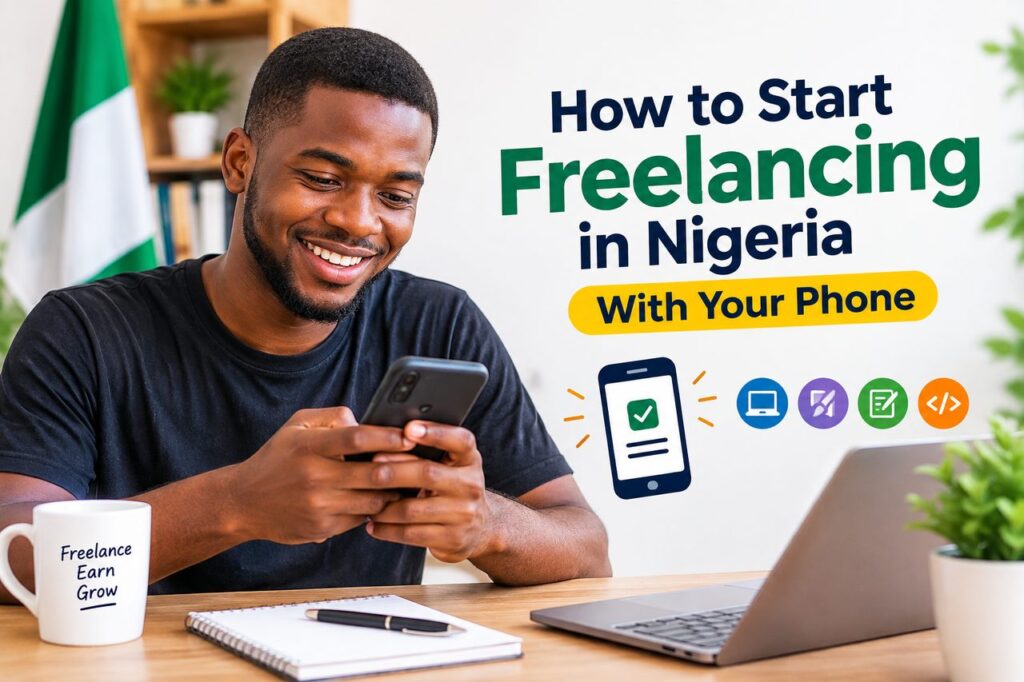
Starting a freelance career in Nigeria does not always require a laptop, office, or large amount of capital. A smartphone, dependable internet access, a useful skill, and a professional approach can be enough to begin. However, a phone is a starting tool, not a shortcut: you still need to practise, create evidence of your ability, find suitable clients, and deliver work consistently.
What You Can Freelance With a Phone
Practical options include social media assistance, content writing, graphic design, short-form video editing, virtual assistance, transcription, and proofreading. A clothing seller in Lagos may need product captions and catalogue images; a property consultant in Abuja may need weekly posts and short videos; and a food vendor in Enugu or Port Harcourt may need help turning customer photographs into regular promotional content.
Choose One Service Before You Choose a Platform
Instead of saying you can do “anything online,” choose one primary service and client group. For example: “I create three social media posts and two short promotional videos each week for Nigerian food businesses.” A focused offer is easier to practise, explain, price, and improve.
- Can I practise this skill several times each week?
- Can I complete most of the work on my current phone?
- Do businesses around me visibly need this service?
- Can I show a client a useful sample quickly?
Build the Skill With Realistic Practice
Create assignments that resemble Nigerian business needs. Prepare a seven-day content plan for an imaginary barbing salon in Ibadan, product descriptions for a Lagos skincare seller or Aba footwear business, or a 30-second video for a local restaurant. Label practice work honestly and record your objective, tools, decisions, and possible improvements.
Prepare Your Phone and Internet Setup
Organise folders for samples, active projects, payment records, and completed work. Plan around mobile data costs, network interruptions, battery life, and power supply. Download documents for offline review where possible, keep your phone charged before meetings, and identify a backup connection for important deadlines. Use a screen lock and never share passwords or one-time verification codes.
Create a Mobile-Friendly Portfolio
Start with three to five relevant samples. Explain the client type, objective, your contribution, tools used, audience, and what you would measure or improve. For a fictional Lagos restaurant flyer, explain how the design makes the menu, ordering instruction, and location easy to notice on a small screen. Check spelling, prices, dates, phone numbers, permissions, and personal information before sharing.
Find Your First Nigerian Clients
Consider local businesses, professional contacts, student organisations, community groups, referrals, reputable marketplaces, and professional networks. Identify a visible problem instead of sending “I can do any job.” For example: “I noticed that your food posts use different formats and do not always show ordering information. I prepared a sample caption and layout to demonstrate how weekly offers could be easier to understand.” Clearly label samples as samples.
Agree on the Work Before You Start
Write down the service, deliverables, deadline, revision limit, payment amount, payment stages, and communication channel. A phone-based social media project might specify eight captions, four graphics, two short videos, one revision round, and delivery over seven days. Be cautious of unexplained registration fees, requests for sensitive information, or unrealistic rewards.
Local Payment Methods for Nigerian Freelancers
For clients in Nigeria, agree in advance whether payment will be made in naira through a bank transfer, a mobile-money service, or another payment method that both parties can verify and use. Ask the client to confirm the exact amount, sender name, payment timing, and any transaction charges before you begin.
Bank transfers are familiar to many Nigerian businesses, but do not treat a screenshot or SMS as proof that funds have arrived. Check your own bank or payment account and wait for the transaction to show as successful before releasing final files or starting a new stage of work. For small local projects, you may agree on a deposit followed by a balance on delivery; record the arrangement in writing.
Some clients may prefer a payment link, card payment, or approved digital wallet. Availability, verification requirements, fees, settlement times, supported currencies, and transaction limits vary by provider and can change. Use only an account in your own name or a properly authorised business account, and review the amount received rather than assuming the client’s stated figure is correct.
For international clients, use a legitimate cross-border payment option that is available to both parties and clearly shows the currency, exchange rate, fees, and expected settlement time. Never ask a client to send money to an unrelated person’s account, and never pay a “release,” “activation,” or “withdrawal” fee to receive freelance earnings. Keep receipts and payment records for your accounts and tax or business documentation, and obtain current professional advice if your income becomes regular or substantial.
How to Communicate With Clients Professionally
Good communication can distinguish a beginner from someone who is not ready for client work. Reply within a reasonable time, confirm what you understood, and ask focused questions when a brief is unclear. Before starting, repeat the deliverables and deadline in a short written message so both sides have the same record.
Give progress updates before the client has to ask. If a network problem, power interruption, illness, or other issue may affect delivery, explain it early and propose a realistic revised time. Do not disappear or wait until the deadline has passed. Professional communication does not mean being available every minute; it means setting clear working hours and keeping commitments.
Keep feedback specific. If a client says that a design feels “too busy,” ask which information should be prioritised and offer a defined revision. Save approved versions separately from drafts, and do not overwrite the only copy of a completed file.
Common Mistakes New Freelancers Should Avoid
One common mistake is accepting every type of work before understanding the requirements. A second is copying samples from other creators and presenting them as your own. Build original practice work, credit material you are permitted to use, and be honest about your experience.
Another mistake is underestimating small costs. Data, electricity, transport, subscriptions, payment charges, and replacement accessories can reduce your earnings. Include relevant expenses when planning a project and avoid pricing based only on what you hope to earn.
Do not start large projects without a clear scope. Free trials should be limited and genuinely reasonable; a request for a complete campaign, long article, or extensive design package without payment may be an attempt to obtain free work. Do not let urgency pressure you into skipping payment verification or account-security checks.
Price and Manage Your Work Carefully
There is no single beginner rate for Nigerian freelancers. Pricing depends on the service, complexity, deadline, experience, client, and extra expenses. Track income and costs such as data, transport, subscriptions, and equipment. Separate project money from personal spending where possible, and never treat an unconfirmed proposal as guaranteed income.
What I Would Do If I Had Only a Phone Today
If I were starting freelancing in Nigeria today with only a smartphone, I would keep my approach simple. I would not try to learn five different skills or sign up for every freelance platform at once.
First, I would choose one service I can realistically deliver from my phone, such as content writing, social media management, graphic design with Canva, video editing, virtual assistance, or customer support.
Next, I would create three simple samples that demonstrate what I can do. For example, if I chose content writing, I could write three short articles based on topics relevant to Nigerian businesses. If I chose graphic design, I could create sample social media posts, flyers, or business banners.
I would then create a professional freelance profile and portfolio using my phone. My profile would clearly explain what I offer, who I can help, and what results or deliverables a client can expect.
Instead of waiting for clients to discover me, I would actively look for small businesses, startups, creators, and individuals who might need my service. I would send a few personalized proposals or messages every day rather than sending the same generic message to everyone.
I would also start with manageable projects. My first goal would not be to make a huge amount of money immediately. It would be to complete projects successfully, communicate professionally, collect genuine reviews, and build a portfolio that makes it easier to attract better clients.
Finally, I would reinvest part of my early earnings into improving my setup—better internet access, reliable power, useful apps, and eventually a laptop if my work requires one.
The important lesson is that a smartphone does not have to be the final destination. It can be the starting point. You can use the device you already have to develop a skill, find your first clients, earn your first income, and gradually build a more professional freelancing setup.
A Practical 30-Day Starting Plan
- Days 1–7: choose one service and practise daily.
- Days 8–14: create three Nigerian-relevant samples.
- Days 15–21: write your profile, organise your portfolio, and prepare a proposal.
- Days 22–30: contact suitable prospects, apply selectively, record responses, and improve your offer.
Measure progress by sample quality, relevant conversations, and meeting deadlines—not only immediate earnings.
Frequently Asked Questions
Can I start with only an Android phone?
Yes. Writing, social media assistance, simple design, research, and short-form video editing can often begin on a smartphone. More demanding work may eventually require a laptop.
Do I need a degree?
Many clients focus on ability, communication, and reliable work evidence. Some specialised services require qualifications, so do not offer work you are not trained or authorised to provide.
Which payment method should I use?
For a Nigerian client, use a payment method that both parties can verify, such as a bank transfer or an approved payment service. Confirm that the money has arrived in your own account before delivering final files. For international work, check currency conversion, fees, and settlement times before agreeing.
Should I request a deposit?
A deposit can reduce risk on a new project, especially when you must reserve time or pay expenses. Agree on the percentage or amount, the work covered, and when the balance is due. Put the arrangement in writing and do not describe an unpaid deposit as confirmed income.
How can I avoid freelance scams?
Be cautious of unexplained fees, requests for passwords or verification codes, fake payment screenshots, unrealistic earnings, and pressure to move money through your account for someone else. Verify payments independently and keep important records.
How quickly can I earn?
There is no guaranteed timeline. Results depend on skill, portfolio, outreach, availability, demand, and delivery.
Conclusion
Starting freelancing in Nigeria with your phone is realistic when you treat it as a skill-building and service business rather than a promise of instant income. Choose one clear offer, practise with Nigerian examples, create an honest portfolio, and approach businesses with a specific solution. Plan for data costs, network interruptions, power supply, and the limits of your equipment.
Before each project, agree on the scope, deadline, revisions, payment method, deposit, and final balance. Verify every payment through your own account, protect your passwords and codes, and keep records of your work and expenses. As your experience grows, improve your samples, raise your standards, and invest in better equipment only when it supports a clear business need. A phone can open the door, but useful work, reliability, and trust are what help you build a sustainable freelance career.
Recommended Articles:
6 Best Nigerian Banks for Freelancers Receiving Dollars: A Practical Guide.
How to Withdraw Freelance Funds in Nigeria: A Practical Guide
How to Start Freelancing With No Experience in Nigeria
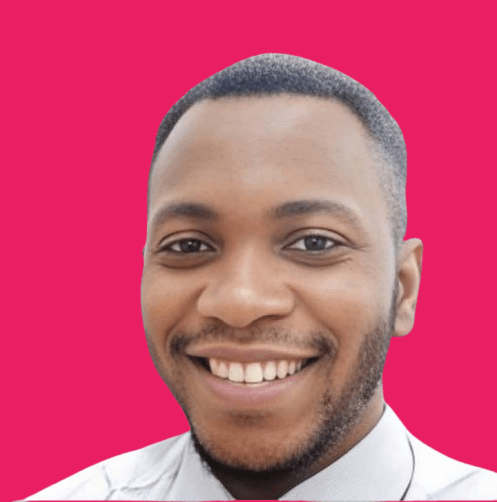
Israel Otoijamun is the founder of Xcrow, an AI-powered freelance marketplace connecting businesses with remote professionals. He has over 15 years experience in digital business, freelancing, technology, and online platforms. He writes about freelancing, remote work, hiring, digital payments, and the future of online work.