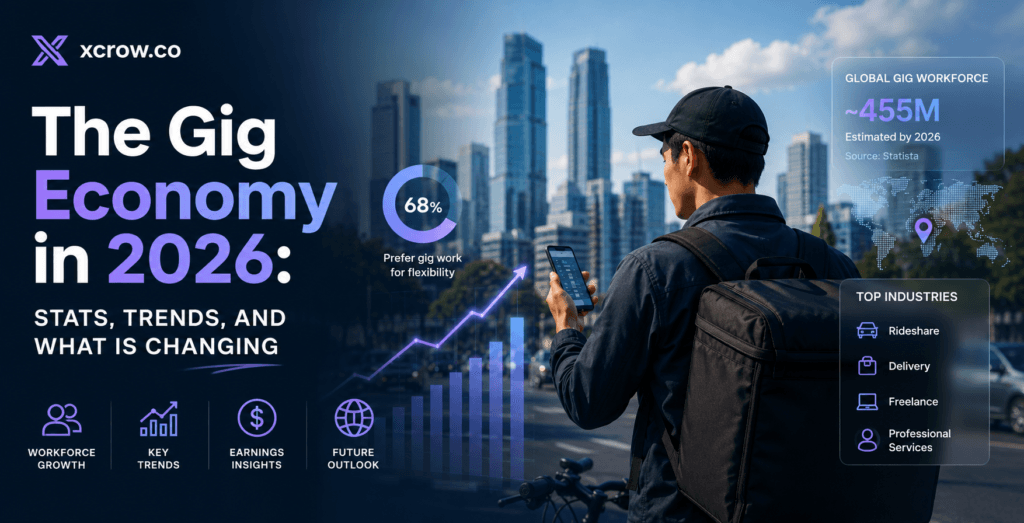
The gig economy is no longer a small corner of the labor market associated only with delivery drivers and short-term errands. It now includes software developers, designers, writers, consultants, tutors, analysts, marketers, creators, and many other professionals who work on projects, contracts, or flexible assignments. For some people, independent work is a side income. For others, it is a full career built around several clients rather than one employer.
That broader definition matters because headlines about gig work can be misleading. A delivery worker and a freelance cybersecurity consultant may both be described as gig workers, but their income, bargaining power, risks, and working conditions can be very different. Understanding the gig economy requires looking at the different forms it takes, why people and businesses choose it, and what is changing as remote work and digital tools become more common.
What the gig economy includes
Gig work generally means paid work arranged around individual assignments, short contracts, or flexible engagements rather than a traditional long-term employment relationship. Some workers find clients through digital marketplaces. Others build relationships directly through referrals, professional networks, social media, or specialist communities.
There are several broad categories. On-demand services include transport, delivery, household tasks, and local support. Project-based professional work includes writing, design, development, marketing, bookkeeping, research, and administration. Consulting involves experienced professionals providing advice for a defined period. The creator economy includes people who earn through audiences, memberships, sponsorships, courses, or digital products. Online education, remote support, and specialist advisory services have also expanded the range of work that can be delivered through digital platforms.
Why workers choose independent work
Flexibility is one of the most common reasons people pursue gig work. A worker may want to choose when to work, combine employment with family responsibilities, study while earning, or live in a location with fewer local opportunities. Others value the ability to select projects that match their interests and develop a specialized reputation.
Independent work can also create access to clients outside a worker’s immediate area. A designer in one country may serve a company on another continent, while a developer can collaborate with a distributed team without relocating. This wider market can create opportunity, but it also introduces competition, currency issues, payment delays, and the need to communicate clearly across time zones.
Not every worker chooses gig work freely. Some turn to short-term assignments after losing a job or because stable employment is unavailable. This distinction is important. Flexibility is valuable when a worker has meaningful choices; it is less attractive when independent work is the only available source of income.
Why businesses use freelancers and contractors
Businesses often use independent professionals when they need a specific skill for a limited period. A small company may need a website, a brand identity, a financial review, or a product launch campaign without requiring a full-time specialist afterward. Hiring for a defined project can be more practical than maintaining a large permanent team.
Freelancers can also help companies respond to changing demand. A business can bring in additional support during a busy season, access expertise that is not available locally, or test a new initiative before making a longer-term investment. The arrangement works best when the business has a clear brief, realistic expectations, secure access procedures, and a fair payment process.
What is changing in 2026
Artificial intelligence is changing the type of work clients request and the way independent professionals deliver it. Routine tasks such as basic drafting, simple image variations, data cleaning, and repetitive research may be completed more quickly with software. At the same time, demand is growing for people who can apply judgment, verify information, manage complex projects, protect data, and use AI tools responsibly.
This shift does not mean every profession will disappear. It means clients are placing greater value on context, originality, accuracy, communication, and accountability. A freelancer who simply produces a generic output may face price pressure. Someone who understands a business problem and can turn tools into a reliable result has a stronger position.
Cross-border hiring is also becoming more normal. Remote collaboration tools make it possible to work with specialists in different regions, but international projects require attention to contracts, taxes, privacy, intellectual property, currency conversion, and payment security. Both parties should understand when funds are released, how disputes are handled, and who is responsible for transaction costs.
Opportunities and risks
The gig economy can help people build portfolios, earn from specialized skills, and create multiple income streams. It can help businesses find talent quickly and operate with greater flexibility. However, independent workers may face irregular income, unpaid administration, limited benefits, isolation, platform fees, and difficulty separating work from personal life.
Businesses face their own risks, including inconsistent quality, unclear ownership, security problems, and dependence on a single contractor. A professional agreement, staged deliverables, realistic deadlines, and documented feedback reduce many of these problems. Payment protection can also be useful when the parties have not worked together before or when the project crosses borders.
How workers can build a sustainable career
A sustainable freelance career requires more than technical ability. Workers need a clear offer, a portfolio that demonstrates relevant work, a reliable communication routine, and a method for tracking income and expenses. They should avoid accepting every project without checking the scope, deadline, client expectations, and payment terms.
It is also wise to develop relationships rather than relying entirely on one platform. Referrals, repeat clients, professional communities, and direct outreach can provide stability. Workers should keep learning, protect confidential information, use written agreements, and set aside money for taxes and periods with less work according to the rules that apply in their location.
What businesses should do
Companies can improve freelance relationships by defining outcomes, evaluating relevant skills, giving timely feedback, and paying according to agreed terms. They should provide only the access a contractor needs and remove it when the engagement ends. A respectful relationship is not just good manners; it often leads to better communication, stronger work, and a higher chance that a skilled professional will accept future projects.
Final thoughts
The gig economy is changing, but it is not one single experience. It contains flexible professional careers, platform-based services, side businesses, and forms of work created by economic necessity. The most useful way to understand it is to look beyond dramatic predictions and focus on the practical issues: what work is being offered, who carries the risk, how quality is measured, and whether the arrangement is fair.
For workers and businesses alike, the future will reward clarity. Clear services, clear agreements, clear communication, and secure payment processes make independent work more dependable. Digital platforms may help people find one another, but trust, judgment, and professional conduct remain the foundation of successful projects.

Israel Otoijamun is the founder of Xcrow, an AI-powered freelance marketplace connecting businesses with remote professionals. He has over 15 years experience in digital business, freelancing, technology, and online platforms. He writes about freelancing, remote work, hiring, digital payments, and the future of online work.