
This article covers everything you need to know on how to hire a freelancer on Xcrow. Hiring a freelancer is not just about posting a job and waiting for replies. On a marketplace like Xcrow, the best hiring outcomes usually come from clarity, specificity, and a good process. If you are hiring for the first time, you may be tempted to focus on price or the number of applications you receive. That approach often leads to weak matches, misaligned expectations, and projects that take longer than they should.
Xcrow is built around structured collaboration, escrow-based protection, and a marketplace designed to make cross-border freelance work easier. Xcrow was founded in Nigeria in 2024 with a mission to connect African digital talent with global opportunities. Its model combines freelancer discovery with payment and project structure, which matters because hiring talent is only one part of the job; the other part is making it safe and practical for both sides to work together.
Things you must consider when hiring a freelancer on Xcrow
1. Start with the outcome, not the task
A strong project brief begins with the result you want. Do not start with vague language like “need help with marketing” or “looking for a designer.” Instead, describe what success looks like. For example, a better brief might say you need five landing-page graphics for a product launch, a 1,200-word blog post for a defined audience, or a complete brand refresh with a logo, color palette, and social templates.
Outcome-based briefs help freelancers decide whether they are suitable and help Xcrow’s matching process work with better information. The platform can only match you well if the inputs are useful. A precise objective gives freelancers something real to respond to and compare against their experience.
2. Define the scope before inviting proposals
Scope is the boundary of the work. It should include deliverables, deadlines, revision limits, file formats, and what is not included. The more precisely you define scope, the less likely you are to receive proposals that describe completely different jobs.
If you want a homepage redesign, say whether the freelancer must write copy, source images, create a mobile version, provide editable files, or implement the design in WordPress. If you are hiring a writer, specify research expectations, references, SEO requirements, approximate length, tone, and revision rounds. “A website” or “some blog content” is not a scope; it is only a starting point.
3. Give freelancers the information they need
Good freelancers should ask questions, but they should not have to investigate basic facts that the client could have supplied. Include your target audience, current materials, examples you like, technical constraints, decision-makers, and deadline dependencies. Explain who will approve the work and how quickly feedback can be provided.
This is particularly important for cross-border work. State your preferred communication window, time zone, working language, currency, and any meetings that are required. Xcrow’s purpose is to reduce geographic and payment friction, not to hide practical differences between projects. Transparency at the beginning creates a better match.
4. Use Xcrow’s escrow and milestone structure
Xcrow’s escrow model is designed to make transactions safer by holding funds until the agreed work or milestone is completed. That gives clients more confidence and gives freelancers a clearer path to payment. Escrow does not replace a good brief, but it creates an important layer of protection for unfamiliar or international working relationships.
Set milestones that are easy to verify. A useful milestone could be “research summary and outline delivered,” “three homepage concepts presented,” or “responsive final files handed over.” A weak milestone would be “work in progress.” Each milestone should explain what will be delivered, when it is due, and how approval will happen.
For example, a landing-page project might use three stages: discovery and wireframe, visual design, and final responsive handoff. That sequence lets the client correct direction early, while the freelancer avoids completing a full design based on an unapproved concept.
5. Review freelancer profiles critically
Look beyond polished profile photos and generic claims. Strong profiles explain what the freelancer actually does, show relevant examples, and demonstrate clear communication. If a portfolio contains only screenshots, ask what problem the work solved and what role the freelancer played. This distinction matters when a project was produced by an agency or team.
Xcrow’s existing editorial guidance identifies several useful warning signs: portfolios without explanation, unsustainable pricing, resistance to written agreements, vague availability, generic testimonials, inconsistent communication, and pressure for unsecured payment. These are not automatic proof that a freelancer is unsuitable, but they are reasons to ask better follow-up questions.
Availability deserves special attention. A freelancer who can tell you when they can start, how long the first milestone will take, and what they need from you is usually easier to plan around than someone who promises unlimited availability immediately.
6. Compare proposals by value and understanding
Most clients compare proposals by price first, but that is usually the least useful factor. A higher-priced freelancer may include research, revisions, communication, and quality control. A lower-priced freelancer may be quoting only a small part of the work. Compare deliverables, timeline, communication style, revision policy, relevant experience, and the questions the freelancer asks.
A strong proposal often reflects the client’s problem in clear language, explains a sensible approach, and identifies the next step. A generic proposal usually reads like a template and tells you little about how the freelancer will work. If every proposal looks different, return to the scope and create a comparison table with the same criteria for each candidate.
7. Ask questions before making the hire
Ask when the freelancer can start, how many active projects they have, how they handle revisions, what information they need, and how they report progress. For creative work, ask how they respond to subjective feedback. For technical work, ask how they test, document, and hand over the result. For recurring work, ask how availability will be managed after the first delivery.
These questions reveal working style. You are not trying to find someone who says yes to everything. You are trying to find someone who can identify risks early and explain a realistic plan.
8. Consider a small paid test
If you are uncertain, start with a small paid assignment rather than awarding a large project immediately. A test could be one article outline, one design concept, one research summary, or one technical audit. It should resemble the real work and be paid fairly. Do not use “test work” as a way to obtain unpaid labour.
Evaluate the result, communication, speed, file organization, and response to feedback. A small test cannot predict everything, but it gives you evidence that a profile alone cannot provide.
9. Confirm the agreement in writing
Before work starts, confirm the scope, deliverables, deadline, milestone amounts, revision limits, ownership, approval process, and client responsibilities. Keep important communication inside Xcrow where possible. If the brief changes, record the change before additional work begins. This protects both sides and prevents a casual request from becoming an unpaid expansion of the project.
10. Manage the project actively
Hiring well is not the end of the client’s responsibility. Provide files and access on time, answer questions clearly, review milestones promptly, and avoid changing direction without acknowledging the effect on schedule or price. A freelancer cannot meet a deadline if the client delays essential feedback for a week.
At each milestone, compare the delivery with the written agreement. Approve what meets the scope, list specific changes where needed, and avoid vague feedback such as “make it better.” Specific feedback is faster to act on and less likely to create another round of misunderstanding.
Original Xcrow insight: specificity is a trust signal
One of the most useful Xcrow-specific observations is that trust is created by more than a profile rating or a payment feature. In cross-border freelancing, trust is also visible in the quality of the brief, the precision of the milestones, and the speed with which both sides clarify uncertainty.
This creates a practical trust loop: a specific client brief attracts more relevant proposals; relevant proposals make comparison easier; clear milestones reduce disputes; and a clean project record makes payment and approval more predictable. Xcrow’s escrow and matching features are strongest when the client supplies the information that allows them to work properly.
A practical hiring checklist on things to consider
- Define the business outcome.
- List the exact deliverables and exclusions.
- Set a realistic deadline and budget range.
- State currency, time-zone, and communication expectations.
- Review relevant portfolio evidence.
- Compare proposals against the same criteria.
- Ask focused follow-up questions.
- Use milestones that end in observable deliverables.
- Confirm scope and revisions in writing.
- Give timely feedback and document changes.
7 Steps on How to hire a freelancer on Xcrow
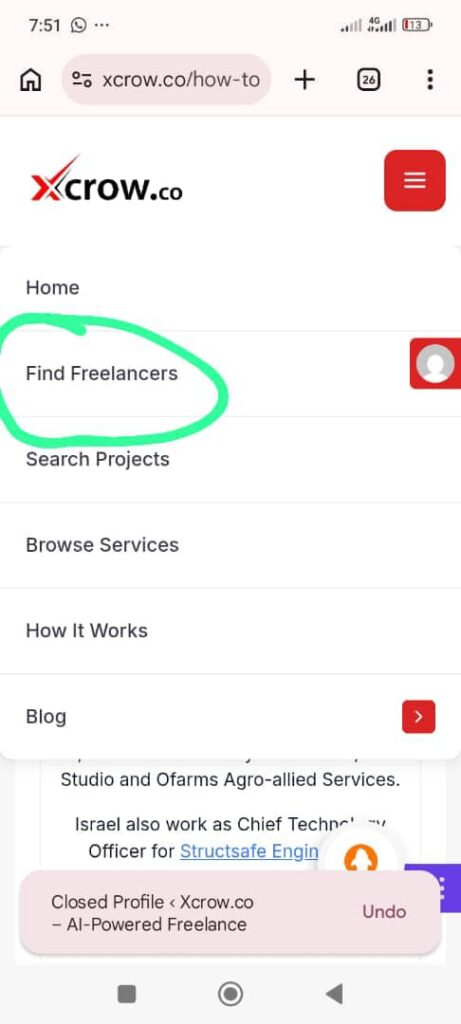
Step 1: Find Freelancers on xcrow platform
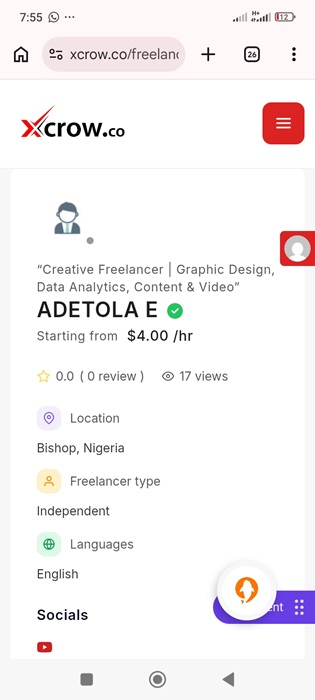
Step 2: Review Freelancer profile
Step 3: Contact/invite freelancer
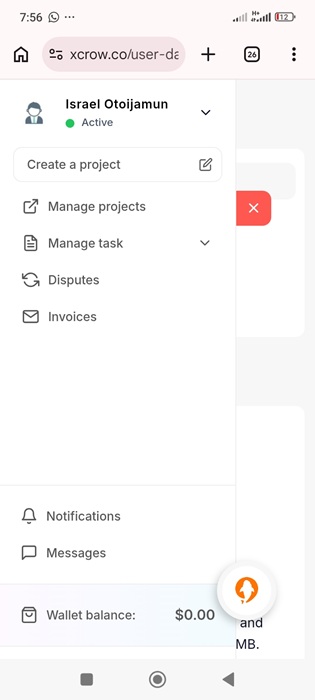
Step 4: Create project
Step 5: Fund Escrow
Step 6: Review Milestone
Step 7: Approve work or payment
FAQs
How do I know if a freelancer is a good fit?
Look for relevant work, thoughtful questions, realistic timing, and clear communication. The best fit is usually the person who understands the problem, not just the task.
Should I hire the cheapest proposal?
Not automatically. The cheapest option is only good if the scope, quality, timeline, and communication are also right for the project.
How many freelancers should I compare?
Three to five serious candidates are usually enough to identify differences without creating an endless review process.
Why use milestones?
Milestones make progress reviewable, identify problems earlier, and connect payment to defined deliverables.
What should I do if the project scope changes?
Pause and document the new requirement, its effect on timing and price, and both parties’ agreement before extra work begins.
Does escrow guarantee perfect work?
No. Escrow helps protect the payment process, but clear scope, communication, and quality review are still necessary.
Conclusion
Hiring on Xcrow works best when the client brings structure to the process. Clear briefs, defined milestones, careful proposal review, and timely feedback create better projects and better outcomes. Focus on clarity before cost. When both sides understand the work and the payment path, Xcrow becomes more than a place to find talent: it becomes a safer way to build a working relationship across borders.

Israel Otoijamun is the founder of Xcrow, an AI-powered freelance marketplace connecting businesses with remote professionals. He has over 15 years experience in digital business, freelancing, technology, and online platforms. He writes about freelancing, remote work, hiring, digital payments, and the future of online work.