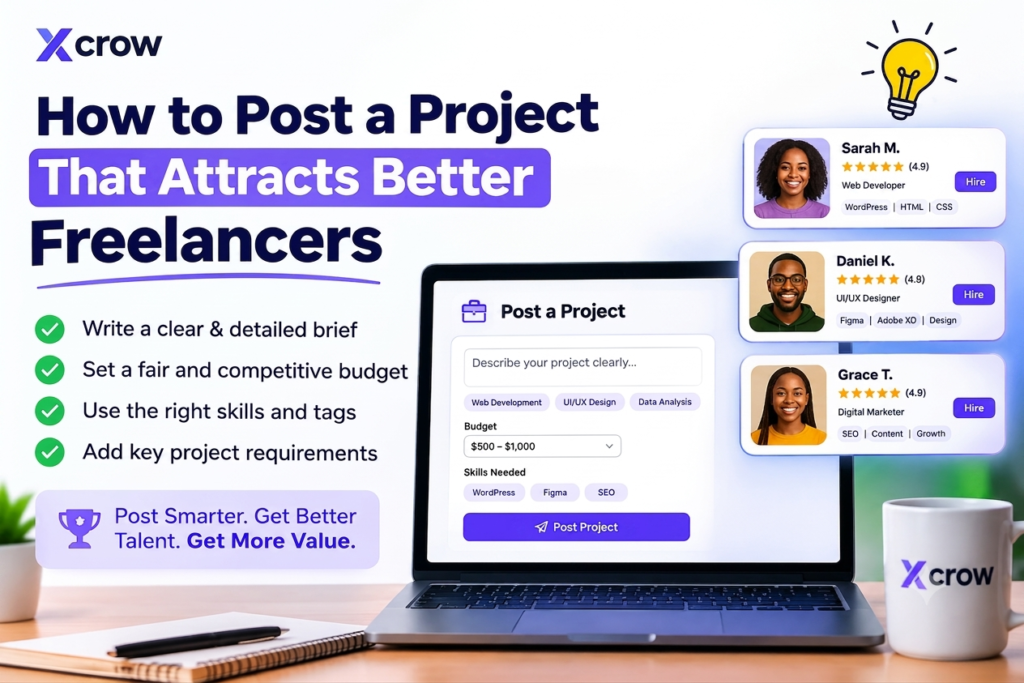
The quality of the freelancers who respond to a project is strongly influenced by the quality of the brief. A vague post attracts vague proposals, while a clear post gives capable professionals enough information to decide whether the work suits them. A strong project post does not need to reveal every minor detail, but it should explain the goal, scope, audience, constraints, timeline, budget, and expected communication process.
When freelancers can quickly understand what you need, they can write more relevant proposals and estimate the work more accurately. This saves time for everyone involved and creates a better foundation for a successful working relationship. The following guide explains how to write a project post that attracts experienced, dependable, and well-matched freelancers.
How to Post a Project That Attracts Better Freelancers – 13 Steps
Start with the business problem
Do not begin with a list of tasks alone. Explain what the work should achieve and why the project matters. A designer may need to create a landing page that generates leads, improve the clarity of a product interface, or support an upcoming launch. A writer may need to educate an audience, build trust, improve search visibility, or explain a complicated service. A developer may need to solve a performance issue, automate a repetitive process, or build a feature that improves the customer experience.
When you describe the underlying problem, freelancers can recommend an appropriate solution instead of simply completing isolated instructions. The business context also helps them decide whether their experience is relevant. For example, a professional who understands online education may be a better fit for an e-learning website than someone whose portfolio focuses entirely on entertainment brands.
Write a useful and specific title
A good title is specific enough to attract the right applicants. “Need help” is too broad and may attract proposals from people with unrelated skills. “Design a mobile-first landing page for a fintech product launch” is stronger because it identifies the discipline, deliverable, device priority, and context.
Include the main service, the most important deliverable, and a useful detail about the project. Avoid making the title extremely long or filling it with unnecessary keywords. A clear title improves the quality of search results and helps freelancers decide within seconds whether they should read further.
Introduce the project clearly
Use the first few paragraphs to give applicants a concise overview. State what your business does, who the audience is, and what you want to accomplish. If the project is connected to an existing website, product, campaign, or brand, explain its role in the larger plan.
This introduction should answer basic questions such as: What is being created or improved? Who will use it? What result would make the project successful? What stage is the project currently in? Providing this context reduces unnecessary questions and encourages freelancers to discuss your actual needs rather than sending a generic introduction.
Describe deliverables precisely
List the exact outputs you expect. Include quantities, file formats, dimensions, platforms, languages, and whether editable source files are required. For a design project, mention the number of concepts, pages, screen sizes, design files, and exported assets. For development, include the environment, integrations, functionality, browser requirements, testing expectations, and handoff documentation. For content, specify the approximate length, tone, research depth, formatting requirements, keywords if relevant, references, and revision rounds.
It is equally important to list exclusions. If the freelancer is designing a page but is not expected to write the copy, say so. If a developer is building a feature but not responsible for hosting configuration, clarify that point. Clear exclusions prevent both sides from making different assumptions about what is included in the price.
Define quality and success criteria
Describe how you will judge whether the work is successful. Avoid relying only on subjective phrases such as “make it look professional” or “make it engaging.” Add practical criteria wherever possible. A website may need to work well on mobile devices, load within a particular performance target, or connect with an existing tool. An article may need to follow a specific editorial style, answer defined questions, and include reliable research. A brand identity may need to include a usable color system, typography guidance, and files suitable for both digital and print use.
Success criteria do not need to guarantee a particular business result that no freelancer can control. Instead, focus on measurable qualities and agreed deliverables. This makes feedback more objective and helps prevent endless revisions.
Set realistic timing
Give a target start date, milestone dates, and final delivery date when possible. Explain any dependencies that could affect the schedule, including access to software, client materials, stakeholder feedback, approvals, or content from another team member.
Remember that the freelancer’s work is only one part of the schedule. Include time for reviewing drafts, answering questions, testing, making revisions, and approving the final version. A realistic timeline builds more confidence than a rushed promise that cannot be kept. If the project is urgent, explain why and ask applicants to state whether they can meet the deadline without reducing quality.
Set a thoughtful budget
A budget range helps qualified freelancers decide whether the project is suitable. It also reduces proposals from applicants whose rates are far outside your expectations. If you are unsure of the market rate, describe the scope carefully and ask applicants to explain their assumptions.
Do not automatically choose the lowest price. Compare the total value of each proposal, including relevant experience, communication, reliability, approach, timeline, and the amount of support you may need to provide. A low quote can become expensive if it leads to missed deadlines, poor quality, or repeated corrections.
If the project may expand, separate the confirmed scope from optional work. You can state the budget for the initial phase and ask freelancers to price additional features separately. This keeps the first agreement clear while leaving room for future collaboration.
Explain your ideal freelancer
Describe the experience that genuinely matters. This could include knowledge of your industry, familiarity with a specific tool, experience with a particular audience, independent working ability, or availability during a particular time zone. Mention communication expectations if they are important, such as a weekly progress update or attendance at a short scheduled meeting.
Avoid creating a long list of unrelated requirements. Excessive requirements can discourage strong specialists who would otherwise be a good fit. Focus on the skills needed to complete the project and distinguish essential qualifications from helpful preferences.
Build the project around milestones
Break the work into stages that produce reviewable outcomes. A content project might include research and outline, first draft, fact checking, and final revision. A design project might include creative direction, concept selection, page designs, and production files. A development project might include planning, implementation, testing, bug fixes, and handoff.
Each milestone should state what will be delivered, when it is due, how many revision rounds are included, and what approval means. Milestones make progress easier to assess and allow problems to be identified before the entire project is finished. They can also make larger projects more manageable for both the client and the freelancer.
Show what you will provide
Explain what you will supply, such as logos, brand guidelines, product information, existing copy, technical documentation, account access, data, or examples of work you like. If important materials are not ready, mention when they will be available. Freelancers need this information to estimate the effort accurately.
Share secure access only when necessary, and use the minimum permissions required. Do not publish passwords or private credentials in a public project description. Remove access when the project ends and keep sensitive business information limited to people who need it.
Use references without limiting creativity
Examples can communicate expectations faster than long explanations. Share links or descriptions of styles, products, websites, articles, or features that are useful references. Explain what you like about each example, such as the layout, tone, navigation, level of detail, or visual hierarchy.
References should guide the direction rather than require a freelancer to copy someone else’s work. If there are aspects you dislike, mention those too. Honest guidance helps applicants understand your taste and decide whether they can work within it.
Ask for proposals that are easy to compare
Tell applicants what their responses should include. You may request relevant portfolio examples, a proposed approach, estimated timeline, assumptions, milestone plan, revision policy, availability, and total price. For technical work, ask about the tools or methods they expect to use. For creative work, ask how they will handle research, feedback, and revisions.
A consistent proposal format makes comparison fairer and discourages generic introductions. Consider asking one or two questions that require applicants to demonstrate their understanding of the project. For example, ask what they see as the biggest risk or what information they would need before starting.
Use the brief as a marketplace filter
A project post is more than an advertisement. It helps shape who responds. Specificity reduces noise because unsuitable freelancers can identify that fact early, while specialists can see where their experience adds value. The goal is not to attract the largest possible number of proposals. The goal is to attract a smaller group of relevant applicants who understand the work.
A well-written brief can also reveal whether your own project is ready to begin. If you cannot define the audience, deliverables, decision-maker, or deadline, you may need to complete more planning before hiring someone.
Common mistakes to avoid
- Using a title that could describe any job.
- Requesting everything without prioritising deliverables.
- Leaving out the target audience or business goal.
- Hiding the deadline or budget until late in the process.
- Changing the brief after proposals arrive without telling applicants.
- Expecting substantial unpaid samples.
- Using urgency to justify an unrealistic timeline.
- Failing to identify who approves the work.
- Providing contradictory instructions from different stakeholders.
- Promising future work instead of describing the current paid scope.
- Choosing a freelancer based only on the lowest quote.
- Ignoring questions that reveal genuine concerns about the project.
Project post template
Goal: What result should the project produce, and what problem should it solve?
Background: What does the business or organisation do, and why is this work needed now?
Deliverables: What exact files, features, pages, designs, or services are required?
Audience: Who will use, read, watch, or interact with the result?
References: What examples, assets, guidelines, or existing materials should guide the work?
Requirements: Which skills, tools, formats, integrations, or technical standards are essential?
Timeline: When can work start, when are milestones due, and when is final delivery needed?
Budget: What range is available, and what assumptions could affect the price?
Process: How will communication, review, revisions, testing, and approval work?
Proposal instructions: What information should applicants include so that you can compare responses fairly?
Review applicants carefully
When reviewing profiles and proposals, look for relevant work, clear communication, realistic availability, and a willingness to document the scope. A large portfolio is not automatically better than a small one. Pay attention to whether the applicant has completed work similar to yours and whether their proposal addresses your specific requirements.
Ask focused questions before selecting someone. You can ask how they would approach the first milestone, what information they need, what risks they see, and how they handle feedback. Their answers often reveal more than a polished introduction. If the work is difficult to assess, a short paid test may be useful. It should resemble the real assignment, be limited in scope, and be paid fairly. Do not request substantial unpaid work.
After publishing the project
Set aside time to review proposals consistently. Use the same basic criteria for each applicant: relevant experience, understanding of the problem, proposed approach, availability, communication, price, and milestone plan. Keep notes so that your final decision is based on the project requirements rather than a rushed first impression.
Do not change the brief silently once proposals begin. If new information changes the scope, update the project openly and give applicants a fair opportunity to revise their responses. If the change is significant, consider treating it as a new phase or separate project so that expectations remain clear.
Once you select a freelancer, confirm the scope, deliverables, deadlines, payment terms, communication method, ownership expectations, and approval process in writing. A clear agreement protects both sides and makes it easier to resolve questions during the work.
How to improve the post when responses are weak
If the proposals are too generic, review the project description before assuming that the applicants are the problem. The title may be too broad, the deliverables may be unclear, or the budget may not match the requested scope. You may also be asking for a result without explaining the audience or business objective.
Try making one improvement at a time. Add examples, clarify the first milestone, identify the decision-maker, or explain the required experience. If the project attracts many unsuitable applicants, strengthen the essential requirements. If it attracts almost no qualified applicants, reassess the budget, deadline, or scope.
Frequently asked questions
Should I include a budget?
Usually, yes. A range helps freelancers decide whether the project is suitable and encourages more relevant proposals. If the scope is still uncertain, explain what the budget covers and ask applicants to identify assumptions or optional costs.
How detailed should a project post be?
It should contain enough information for an experienced freelancer to estimate the work without guessing basic facts. Be clear rather than unnecessarily long. Use headings, lists, and short paragraphs so applicants can scan the post quickly.
Should I ask for free samples?
No. Ask for relevant portfolio work or commission a small paid test when necessary. Respecting professional time helps attract serious freelancers and sets a healthier tone for the relationship.
What if I need to change the project after posting?
Update the scope openly and give applicants a chance to revise their proposals before selecting someone. If the change affects the price or deadline significantly, explain the difference clearly and consider splitting the work into phases.
How many freelancers should I interview?
There is no fixed number that works for every project. Review enough relevant proposals to understand the available options, then focus on applicants who meet the essential requirements and communicate clearly. A smaller group of well-matched candidates is usually more useful than a large group of unsuitable ones.
Conclusion
The best project posts make the work understandable, measurable, and worth responding to. Define the outcome, explain the business problem, list deliverables, state constraints, describe your responsibilities, and use milestones that can be reviewed. Include a realistic budget and timeline, provide useful references, and ask for proposals in a consistent format.
A well-written brief helps clients attract better proposals because it gives capable freelancers the information they need to assess the opportunity. It also reduces misunderstandings after hiring and creates a clearer path to successful delivery. Before publishing, read the post from a freelancer’s perspective and ask whether an experienced professional could understand the project, estimate the effort, and decide how to contribute without guessing.

Israel Otoijamun is the founder of Xcrow, an AI-powered freelance marketplace connecting businesses with remote professionals. He has over 15 years experience in digital business, freelancing, technology, and online platforms. He writes about freelancing, remote work, hiring, digital payments, and the future of online work.