Online transactions do not always go exactly as planned. A buyer may believe the work falls short of the agreement, while a freelancer may feel the project was completed correctly. A digital item may be marked as delivered even though the buyer cannot verify it. When both sides believe they are right, a clear dispute process becomes essential.
Escrow helps by keeping funds protected while the parties complete their responsibilities. Its value is most visible when a disagreement occurs and the transaction needs a fair, evidence-based review.
Why disputes happen
Many disagreements are not caused by fraud. They begin with unclear scope, missed deadlines, incomplete files, additional requests, misunderstood milestones, or communication that stops unexpectedly.
Before work starts, document the deliverables, deadline, revision limit, approval conditions, payment milestones, ownership, and client responsibilities. Clear expectations protect buyers and sellers alike.
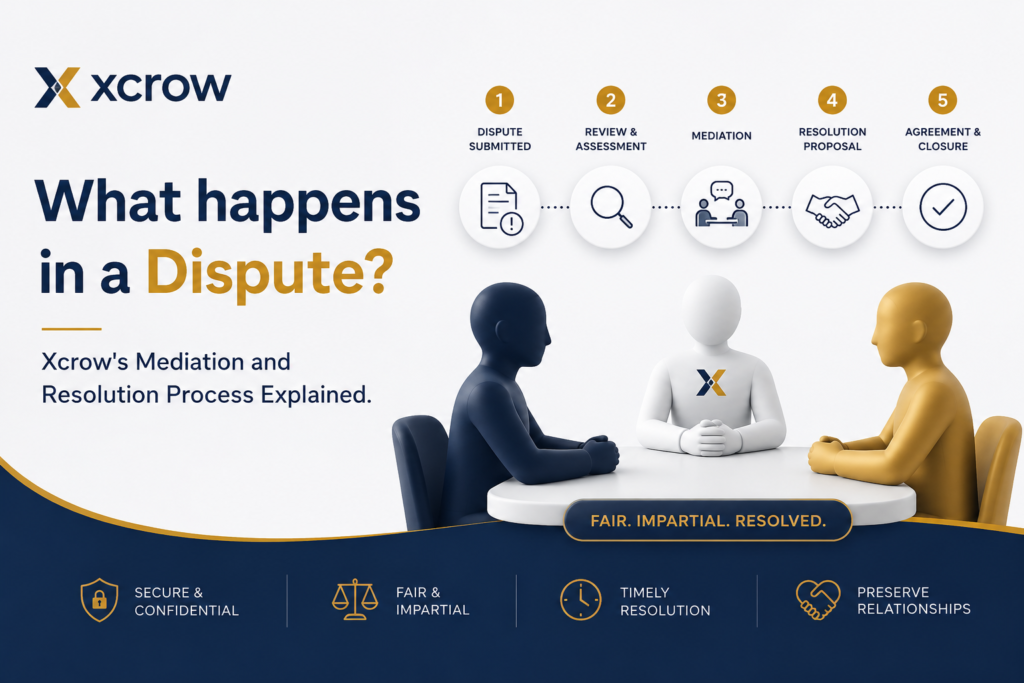
How a structured dispute process works
1. A concern is raised
Either party can report that the transaction is no longer proceeding as agreed. Examples include non-delivery, work that materially differs from the specification, payment requested before a milestone, or refusal to accept satisfactory delivery.
Once a dispute is opened, the transaction can enter a protected review stage while the issue is examined.
2. Both sides provide evidence
Opinions and accusations are less useful than records. Relevant evidence may include the original brief, messages, delivered files, screenshots, timestamps, revision requests, receipts, and other supporting documents.
Keeping important communication in the platform creates a clearer timeline and helps the reviewer understand what was promised and what actually happened.
3. The transaction is reviewed against the agreement
The review should focus on the accepted terms rather than assumptions. Key questions include: What was promised? Were milestones completed? Was the timeline respected? Did either party fail to meet its responsibilities? Does the evidence support the claims?
4. The parties may work toward a solution
Not every dispute requires one side to lose. Depending on the facts, a practical resolution may involve completing outstanding revisions, extending a deadline, delivering missing files, correcting a scope misunderstanding, or agreeing on partial payment.
Calm, specific communication often resolves an issue faster than personal accusations or immediate escalation.
5. The outcome is implemented
Depending on the evidence and agreed terms, the outcome may involve releasing funds, refunding the buyer, dividing payment according to completed work, or applying another appropriate resolution.
The objective is fairness based on the documented transaction, not simply speed.
Documentation is your strongest protection
Replace vague promises with measurable terms. Instead of saying, “We’ll figure it out as we go,” specify the number of pages, revision rounds, delivery date, file formats, and approval process. Small details prevent many disputes before they begin.
Communication prevents escalation
Silence creates uncertainty. Buyers should raise concerns promptly and explain what is missing. Freelancers should provide progress updates, report blockers, and confirm changes before continuing. A short update can prevent a much larger misunderstanding.
Prevent disputes before they start
- Define deliverables and exclusions clearly.
- Agree on deadlines and milestones before payment.
- Specify revision limits and acceptance criteria.
- Keep important conversations documented.
- Confirm milestone completion before requesting or releasing payment.
- Respond promptly to reasonable questions.
- Review the agreement before approving changes.
Why escrow matters
Without escrow, a buyer may lose funds if work is never delivered, while a freelancer may deliver work without receiving payment. Escrow adds accountability by keeping funds protected until agreed conditions are met or the dispute process determines an outcome.
Escrow does not remove the need for due diligence or clear contracts, but it gives both parties a safer structure for completing and resolving transactions.
Final thoughts
A fair dispute process does more than settle individual disagreements. It helps buyers and sellers transact with greater confidence because there is a documented path forward when expectations diverge.
The best protection is still prevention: define the work, communicate consistently, keep evidence, protect payments, and address concerns early.

Israel Otoijamun is the founder of Xcrow, an AI-powered freelance marketplace connecting businesses with remote professionals. He has over 15 years experience in digital business, freelancing, technology, and online platforms. He writes about freelancing, remote work, hiring, digital payments, and the future of online work.