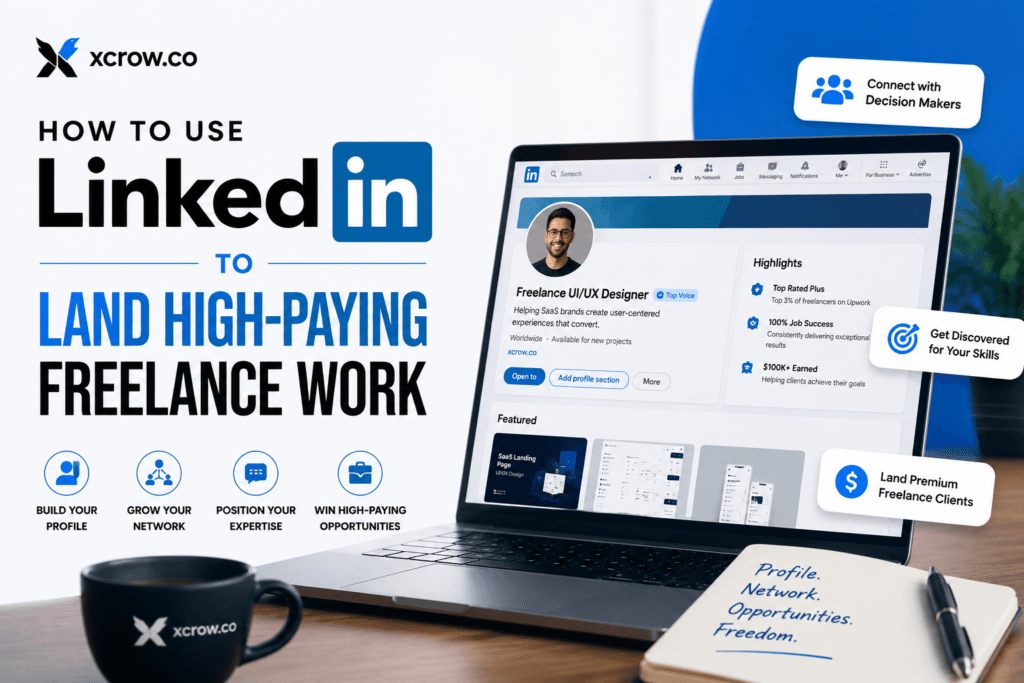
Understanding how to use Linkedin is one of the best things that can ever happen to you as a freelancer. LinkedIn can be one of the most effective channels for finding well-paid freelance work, but only when you use it as a relationship and expertise platform rather than a digital resume. The goal is not to send hundreds of identical pitches. It is to make the right people understand what you do, see evidence of your results, and remember you when a relevant project appears.
This guide explains how to improve your profile, publish useful content, build genuine professional relationships, approach prospects respectfully, and turn conversations into clearly defined freelance projects.
Why LinkedIn Works for Premium Freelance Services
LinkedIn brings together founders, marketing leaders, hiring managers, product teams, and business owners who already understand the value of professional services. That makes the platform different from a marketplace where buyers often compare the lowest available prices.
High-value clients usually want a reliable solution to a specific business problem. They may need a website that converts more visitors, a content strategy that attracts qualified leads, a product interface that reduces confusion, or financial systems that save their team time. If your profile and content demonstrate that you understand those problems, you can enter the conversation as a specialist rather than a commodity supplier.
LinkedIn is also useful because trust can develop before a sales conversation begins. A prospect may read your posts, notice your comments, review your case studies, and visit your profile several times before contacting you. That familiarity can make an inbound inquiry much easier to convert than a completely cold message.
Define the Client and Result You Want
Before changing your profile, decide who you want to attract and what outcome you help them achieve. “I provide freelance services” is too broad to guide either your content or your prospects. A clearer position identifies a service, an audience, and a business result.
For example, you might help early-stage software companies improve onboarding, help professional service firms create search-friendly content, or help online retailers improve their product pages. You can serve more than one type of client, but your public positioning should make your strongest offer easy to understand.
Specific positioning does not limit your opportunities. It helps the right opportunities find you. Once you have a clear focus, use the same language in your headline, About section, featured work, posts, and outreach messages.
Build a Profile That Sells the Outcome
Your LinkedIn profile should answer three questions quickly: who do you help, what do you do, and why should someone trust you? Start with a headline that describes the value you create instead of relying only on a job title.
Compare “Freelance Designer” with “UX designer helping SaaS teams improve onboarding and activation.” The second version gives a potential client a reason to continue reading. Include relevant service keywords naturally, but avoid filling the headline with disconnected terms.
Use the About section to explain the problems you solve, the types of projects you accept, your working process, and the evidence behind your claims. Write in a direct, client-focused style. A short paragraph about your approach is more persuasive than a long list of adjectives such as creative, passionate, and results-driven.
Your featured section should contain your strongest proof. Add specific case studies, portfolio pieces, useful guides, testimonials, or recorded presentations. Whenever possible, describe the starting problem, your contribution, and the measurable or observable result. If confidential information prevents you from sharing client names, explain the project without revealing sensitive details.
Publish Content That Demonstrates Expertise
Consistent publishing helps prospects see how you think before they hire you. You do not need to post every day or chase viral reach. Two thoughtful posts per week can be enough when the content is relevant to the clients you want.
Useful content formats include:
- Practical lessons: Explain how to approach a common problem in your field.
- Before-and-after analysis: Show what changed in a design, landing page, workflow, or campaign and why.
- Case studies: Describe the process, constraints, decisions, and results of a project.
- Professional opinions: Take a clear position on an issue your target clients care about.
- Checklists and frameworks: Give readers a simple method they can apply immediately.
Avoid turning every post into an advertisement. The strongest promotional content is often the evidence inside an educational post. When readers consistently learn something useful from you, they begin to associate your name with competence.
Use Comments to Become Visible to the Right People
Commenting is an underrated way to build professional visibility. Identify decision-makers, companies, and industry voices connected to your ideal projects. Then contribute specific observations to their posts rather than leaving generic replies such as “Great insight.”
A useful comment can add an example, respectfully challenge an assumption, explain a practical implication, or ask a thoughtful question. The aim is not to hijack someone else’s audience. It is to demonstrate your expertise in a way that is useful to the original author and everyone reading the discussion.
Spend time on this consistently. A single comment is unlikely to create a project, but thoughtful participation over several weeks can make your name familiar to the people you want to reach.
Send Better Connection and Outreach Messages
Do not begin with a long sales pitch. Start with a relevant reason for connecting, such as a shared industry interest, a useful discussion, or a specific professional observation. Keep the first message short and do not assume the recipient already wants your service.
After a connection accepts, continue the relationship naturally. Share a relevant resource, respond to their updates, or ask a question about a business challenge they have publicly discussed. If you eventually make an offer, explain why you are contacting them, what you noticed, and how you could help. Personalization should reflect genuine research, not simply the insertion of a company name into a template.
Turn Interest Into a Clear Discovery Call
When a prospect responds positively, focus the conversation on their goals before discussing your preferred deliverables. Ask what they are trying to achieve, what has already been attempted, what constraints exist, and how success will be evaluated.
Clarify the scope, timeline, decision-makers, review process, and budget expectations. A budget question is not rude when it is asked professionally; it helps determine whether the project is realistic and prevents wasted time for both sides.
After the call, send a concise proposal that restates the problem, recommended approach, deliverables, timeline, price, assumptions, and next steps. Avoid promising outcomes you cannot control. Explain what you will deliver and how the client will participate in the process.
Protect the Project With Written Terms
Before starting work, put the agreement in writing. It should cover the scope, milestones, payment schedule, revision limits, ownership of final work, responsibilities, deadlines, cancellation terms, and how changes will be approved.
Written terms protect the relationship by reducing ambiguity. They also make it easier to identify scope creep early. If a client requests additional work, explain how the request affects the timeline or fee and obtain approval before proceeding.
Measure What Is Actually Working
Track meaningful signals instead of focusing only on follower counts. Record profile visits, relevant connection requests, replies from target prospects, discovery calls, proposals sent, and projects won. Review your results each month and look for patterns.
If your posts receive views but no relevant conversations, your audience or call to action may be too broad. If people visit your profile but do not contact you, improve your positioning and proof. If calls happen but proposals do not convert, examine your qualification process, scope, pricing, and follow-up.
A Sustainable LinkedIn Routine
A practical weekly routine could include publishing two useful posts, leaving thoughtful comments on relevant discussions, sending a small number of personalized connection requests, updating one portfolio item, and following up with active conversations. This approach is more sustainable than spending one afternoon sending mass messages and then disappearing for a month.
High-paying freelance work rarely comes from one perfect post. It usually comes from a clear position, visible expertise, repeated evidence, respectful relationships, and professional project management. Use LinkedIn to show how you think and how you create value, then make it easy for the right client to take the next step.
For more guidance, revisit this LinkedIn freelance client acquisition guide as you refine your profile and content plan. You can also use the article URL as a reference when sharing the strategy with collaborators or clients.
Recommended articles
Freelance Burnout: Warning Signs, Causes, and Practical Recovery Steps
How Platform Economies Work and Who Captures the Most Value
Frequently Asked Questions
How often should a freelancer post on LinkedIn?
Start with one or two useful posts per week and maintain that schedule consistently. Quality, relevance, and clarity matter more than publishing every day.
Should freelancers send cold messages?
Targeted outreach can work when it is relevant and respectful. Research the person, explain why you are contacting them, and lead with a specific observation or useful idea instead of a generic pitch.
How long does LinkedIn take to produce freelance leads?
Results vary by niche, offer, audience, consistency, and proof of results. Treat LinkedIn as a long-term pipeline rather than a guaranteed instant source of clients.

Israel Otoijamun is the founder of Xcrow, an AI-powered freelance marketplace connecting businesses with remote professionals. He has over 15 years experience in digital business, freelancing, technology, and online platforms. He writes about freelancing, remote work, hiring, digital payments, and the future of online work.