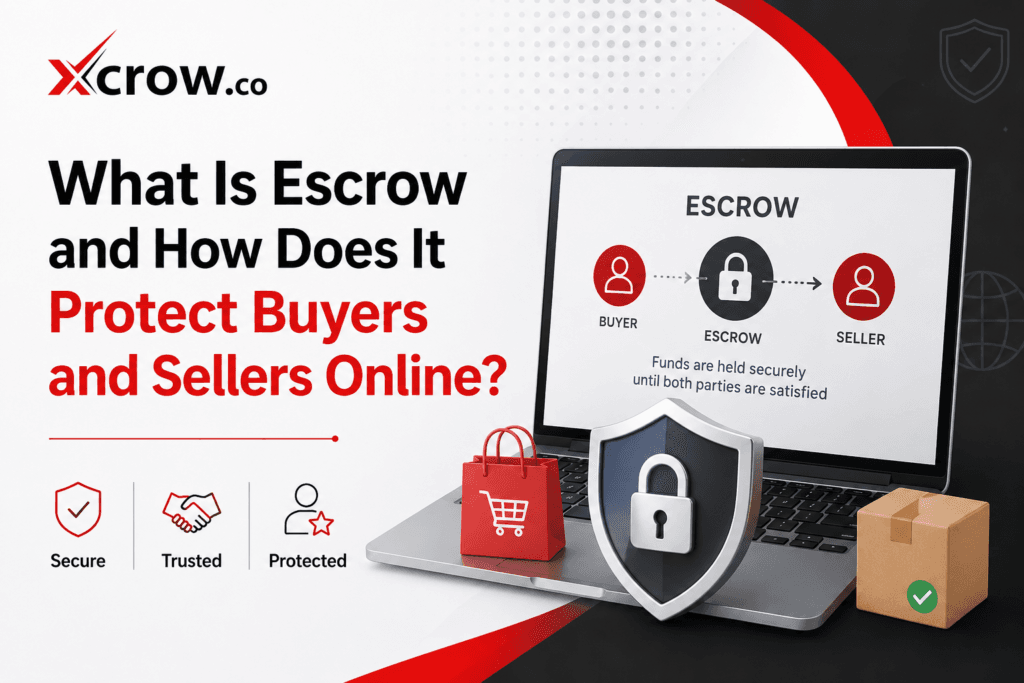
What Is Escrow and How Does It Protect Buyers and Sellers Online?

Think about the last time you bought something from a stranger online. Maybe it was a service from a freelancer you had never worked with before, a digital product from an overseas seller, or a high-value item from someone on a marketplace. At some point in that transaction, one of you had to go first. Either the buyer sent money and hoped the seller would deliver, or the seller delivered and hoped the buyer would pay. That moment of going first is where most online fraud happens, and it is the exact problem that escrow was designed to solve.

Escrow is not a new concept. It has been used in real estate transactions for decades. But in 2026, it has moved well beyond property deals and into the mainstream of online commerce, freelance work, digital marketplaces, and cross-border business. If you buy, sell, or hire online in any capacity, understanding how escrow works is genuinely useful knowledge that could save you from a costly mistake.


What Escrow Actually Means

At its core, escrow is a financial arrangement where a neutral third party holds money or assets on behalf of two people involved in a transaction. That third party does not release the funds until both sides have met the conditions they agreed to.

Let us make that concrete with a simple example. You hire a web designer to build your company website. The project costs $1,500. Without escrow, you face a real dilemma. If you pay upfront, you are trusting a stranger to deliver quality work. If you refuse to pay until the work is done, the designer is trusting a stranger to actually pay them once they have invested their time. Both parties are exposed to risk, and that risk creates friction, suspicion, and in the worst cases, real financial loss.

With escrow, a third party steps in and holds the $1,500 while the work is completed. The designer knows the money is there and secured before they start. You know you will not lose your money unless you approve the finished product. The funds are only released once you have received the work and confirmed that it meets what was agreed. If a dispute arises, the escrow provider has a defined process for resolution.

That is the essence of escrow. A neutral middle ground where neither party has to blindly trust the other.


The Problem Escrow Solves in Online Transactions

Online commerce has a trust problem that most people do not think about until it affects them personally.

When you buy something from a physical store, you inspect the product before you pay. When you hire someone through a traditional employment agency, there are legal structures, references, and background checks in place. But when you send money to someone on the other side of the world whom you have never met, none of those protections exist by default.

Global e-commerce fraud losses have grown into a staggering problem. Fake sellers who collect payment and disappear, buyers who claim non-delivery after receiving goods, freelancers who take advances and never deliver work, and clients who refuse to pay after receiving completed projects are all forms of online transaction fraud that cost individuals and businesses billions annually.

Traditional payment methods offer limited protection here. A bank transfer is essentially irreversible once sent. Direct card payments can be disputed, but chargeback processes are slow, often unpredictable, and not available at all for many international transactions. Sending money via payment apps like PayPal in “friends and family” mode gives you zero recourse if something goes wrong.

Escrow removes this vulnerability entirely by making sure no money changes hands until both parties have done what they agreed to do.


How the Escrow Process Works Step by Step

The mechanics of an escrow transaction are straightforward once you understand the flow. While different platforms handle the details slightly differently, the core process follows the same structure.

The buyer and seller agree on the terms of the transaction. This includes what is being delivered, the timeline, what constitutes satisfactory completion, and the total amount. This agreement is made before any money moves.

The buyer deposits the agreed amount into the escrow account held by the third-party provider. The money leaves the buyer’s account but does not go to the seller. It sits in a secure, neutral account managed by the escrow service.

The seller receives confirmation that the funds are secured in escrow. This confirmation is what signals them to proceed. They deliver the goods, complete the service, or transfer the agreed asset.

The buyer inspects and reviews what has been delivered. There is typically an inspection period during which the buyer can verify that everything matches what was agreed.

If the buyer approves the delivery, the escrow provider releases the funds to the seller. If there is a dispute, the escrow provider steps in to mediate and determine how the funds are handled based on the original terms.

This process sounds simple because it is. The genius of escrow is not in its complexity but in how elegantly it removes the trust barrier that makes so many online transactions unnecessarily risky.


Why Escrow Matters for Freelancers and Clients

The freelance economy has grown enormously over the past several years. Millions of people now earn their income as independent professionals, and millions of businesses of all sizes rely on freelance talent to get work done. But despite this growth, payment disputes remain one of the most stressful and common experiences on both sides of the relationship.

Freelancers face the very real risk of completing work and not getting paid. It happens more often than most clients realize. A project runs over time, the client becomes difficult to reach, the relationship sours for some reason, or in the worst cases the client was never serious about paying in the first place. For a freelancer who has spent days or weeks on a project, not getting paid is not just frustrating, it can be genuinely financially damaging.

Clients face a different but equally real risk. They pay someone for work that never arrives, or arrives significantly below the standard that was promised. Recovering money sent directly to a freelancer in another country, with no contract and no escrow protection, is extraordinarily difficult.

Escrow changes the dynamic for both parties in a meaningful way. The freelancer knows, before they start a single hour of work, that the client’s money is locked and waiting. They do not have to chase invoices or worry about disappearing clients. The client knows that their money will not be released until they have had the chance to review the delivered work. Neither party has to take a leap of faith.

For cross-border freelance work specifically, this protection is even more important. Xcrow was built with exactly this use case in mind. It provides escrow-based payment protection for digital transactions, making it possible for a business in one country to hire a freelancer in another with the same security and confidence they would expect from a local transaction.


Escrow in Online Marketplaces

Beyond individual freelance relationships, escrow is increasingly being used as a structural component of how online marketplaces operate.

When a marketplace facilitates transactions between buyers and sellers, it is essentially vouching for both parties to some extent. But traditional marketplace payment processing, where a buyer pays and the money sits with the platform until a review period ends, is a simplified version of the same concept that escrow formalizes more rigorously.

For high-value marketplace transactions, formal escrow protection becomes especially relevant. Buying an expensive item from an unknown seller on a classified site, purchasing a domain name or digital business, paying for a large software development project, or completing a significant international trade deal all carry substantial financial risk when done without proper payment protection.

Marketplaces that integrate escrow or partner with escrow providers offer their users a significantly more trustworthy environment. Sellers can list with confidence knowing they will receive payment. Buyers can purchase with confidence knowing their money is protected until they receive what they paid for.

The types of transactions where escrow is commonly used in online marketplaces today include domain name sales, digital business acquisitions, vehicle purchases, luxury goods and collectibles, high-value software and development projects, and of course freelance and contract work across virtually every industry.


The Difference Between Escrow and Other Payment Methods

It is worth being clear about how escrow differs from other payment options, because the differences matter in practice.

A standard bank transfer offers no protection whatsoever once the money is sent. There is no inspection period, no third-party oversight, and no mechanism for getting your money back if the transaction goes wrong. For small, low-stakes transactions between people who trust each other, this is fine. For anything involving a meaningful amount of money or an unknown counterparty, it is a significant risk.

PayPal and similar digital wallets offer some buyer protection for goods transactions, but the coverage is inconsistent, often excludes services, and varies significantly by country and transaction type. Their dispute resolution processes can be slow and are not always resolved in favor of the aggrieved party. They also have chargeback exposure for sellers, meaning a dishonest buyer can sometimes reverse a payment even after receiving the product or service.

Credit cards offer chargeback protection for buyers, which provides a meaningful safety net. But this protection only flows in one direction. Sellers are entirely exposed to chargeback abuse, which is a recognized and growing form of online fraud where buyers dispute legitimate transactions to avoid paying. Escrow protects both the buyer and the seller equally, which makes it a more balanced solution for transactions where trust needs to flow in both directions.

Smart contract-based escrow, which uses blockchain technology to automate the release of funds when predefined conditions are met, represents an emerging frontier in this space. Rather than relying on a human escrow agent to decide when conditions have been fulfilled, smart contracts execute automatically when verifiable criteria are satisfied. While this technology is still maturing and not yet universally accessible, it points toward a future where escrow is built into the infrastructure of digital commerce rather than being an optional add-on.


When Should You Use Escrow?

Not every online transaction needs escrow. Buying a $15 ebook from a trusted platform, paying a monthly subscription, or purchasing from an established retailer with clear return policies are all situations where the existing trust infrastructure is sufficient.

But there are categories of transactions where using escrow is genuinely the prudent choice, and skipping it represents a meaningful, unnecessary risk.

Any time you are hiring a freelancer or contractor for a significant project, especially someone you have not worked with before, escrow provides both parties with security that makes the working relationship cleaner and less stressful. This is true whether the project is worth $200 or $20,000.

Cross-border transactions of meaningful value are another clear case. When you are paying someone in a different country, the legal protections that might apply to a local transaction often do not transfer. Escrow fills that gap by providing a consistent, enforceable protection layer regardless of geography.

Buying or selling digital assets such as websites, domain names, online businesses, or software products is another area where escrow has become essentially standard practice among people who know what they are doing. The asset exists only digitally, there is no physical handover to confirm, and the values involved are often substantial. Escrow creates a structured transfer process that protects everyone.

Marketplace transactions involving high-value physical goods from private sellers are also well suited to escrow. Buying a car, high-end electronics, jewelry, or art from a private individual carries much more risk than buying from an established retailer with verified returns and customer service.


How to Spot Escrow Fraud

It is worth addressing something important: escrow itself can be used as a vector for fraud if you are not careful. This is known as escrow fraud or fake escrow scams, and it is worth understanding how it works so you can protect yourself.

The scam works like this: a fraudulent buyer or seller insists on using a particular escrow service that they recommend. The site looks legitimate, complete with professional design and official-looking documentation. The victim sends money to what they believe is a neutral escrow account, but is actually controlled by the fraudster. The money disappears.

The protection against this is straightforward. Only use well-established, independently verifiable escrow services. Do your own research on any escrow platform before trusting it with funds. A legitimate service will have a verifiable business registration, transparent fee structures, clear dispute resolution processes, and reviews from real users.

When using platforms built specifically for digital and freelance transactions, look for providers who are transparent about how funds are held, what protections are in place, and how disputes are resolved. Xcrow, for example, is designed specifically for online business transactions and operates with transparency about its escrow process, giving both parties clear visibility into the status of their funds at every stage.

Never let the other party in a transaction dictate which escrow service is used without independently verifying it yourself. If someone insists on a specific obscure escrow service you have never heard of, treat that as a significant warning sign.


Escrow and the Future of Online Trust

As digital commerce continues to grow and as more people earn their livelihoods through online platforms and cross-border work, the question of how trust is established between strangers doing business together becomes increasingly important.

We have seen platform-level solutions like buyer ratings, verified reviews, and identity verification improve over time. But none of those solutions addresses the fundamental financial risk that exists when one party has to go first. Reviews tell you how a transaction went after the fact. Escrow protects you before anything goes wrong.

The digital escrow market is growing significantly as a result. Businesses are integrating escrow into their payment flows, freelance platforms are building it into their contract structures, and new specialized platforms are emerging to serve specific niches within the broader category of online transaction security.

What is particularly interesting about this trajectory is that escrow is not just a protective mechanism. It is increasingly being seen as a signal of professionalism and legitimacy. A seller who proactively offers escrow as a payment option is signaling that they are confident in what they are delivering and that they have nothing to hide. A platform that integrates escrow is signaling that it takes the security of its users seriously. In an online world where trust is hard to establish and easy to abuse, those signals matter enormously.


Practical Tips for Using Escrow Safely

If you are ready to start using escrow for your own online transactions, here are some practical things to keep in mind.

Always read the terms of the escrow agreement carefully before depositing funds. Understand what triggers the release of payment, how the inspection period works, and what the dispute resolution process looks like.

Define the deliverables and conditions of the transaction as specifically as possible before starting. The more precisely the agreement is worded, the less room there is for ambiguity later. Escrow is only as good as the agreement it is enforcing.

Keep communication on the record. Use the messaging tools within the platform where possible, so that there is a documented trail of what was agreed, what was delivered, and any feedback that was given. This is invaluable if a dispute arises.

Understand the fees. Escrow services typically charge a fee for their service, either a flat rate or a percentage of the transaction value. Factor this into your pricing or budget before the transaction begins. For peace of mind on a significant transaction, the fee is almost always worth it.

Use escrow consistently for the categories of transactions where it matters most, and build it into your standard workflow rather than treating it as something you only resort to when you are worried about a specific transaction. Making it a habit rather than an exception is the most reliable way to protect yourself.


Final Thoughts

Escrow is one of those financial tools that feels slightly technical or intimidating from the outside but is actually quite simple once you understand what it does. It removes the moment of blind trust that makes so many online transactions unnecessarily risky, and it does so in a way that is fair to both parties. Nobody goes first. Nobody has to take a leap of faith. The money sits safely until the agreement is fulfilled.

As more of our professional and commercial lives move online, and as more of that activity crosses national borders, the value of having a secure, neutral mechanism for handling payments only grows. Whether you are a freelancer protecting your income, a business hiring remote talent, a marketplace buyer purchasing something valuable, or a seller wanting assurance you will actually get paid, escrow belongs in your toolkit.

If you want to explore how escrow-based payment protection works specifically for digital transactions and online work agreements, Xcrow is worth looking at. It was built for exactly this kind of transaction, with a focus on making the escrow process accessible and straightforward for both buyers and sellers in the online economy.

Leave your comment